Campfire Tripods: Common Problems and Professional Solutions
The campfire tripod (also called Dutch oven tripod, cooking tripod, hanging grill tripod, or fire pit tripod) is one of the most useful and time-tested pieces of outdoor cooking gear. It allows you to suspend heavy cast iron Dutch ovens, kettles, grill grates, flat griddles, or even multiple pots over an open fire with adjustable height control — giving you precise temperature management that fixed grills or ground-level cooking simply cannot match.
Yet almost every camper who has used a tripod for more than a few trips has encountered at least one frustrating problem: wobbling legs, slipping chain, tipping under load, rust on the frame, difficult height adjustment, chain tangling, or the entire setup collapsing at the worst possible moment.
The “Wobble” and Structural Instability
Even on a tripod, a heavy load can cause the legs to slide outward or the entire structure to vibrate when you are stirring food.
The Solution: The “Footing” Protocol
The Ground Bite: Ensure the pointed ends of the tripod legs are driven into the soil. If you are on rocky ground where “biting” is impossible, use a folding BBQ grill wholesale base or a heavy chain to tether the three legs together at the bottom. This prevents the legs from “splaying” under the weight of a heavy pot.
Center of Gravity: Always hang your cookware directly below the apex. If you are using a portable gas burner beneath the tripod, ensure the burner is perfectly centered to avoid uneven thermal expansion of the legs.
Chain Slippage or Jamming
The height-adjustment chain is the “throttle” of your fire. If the chain slips, your meal could end up in the ashes; if it jams, you risk overcooking your food.
The Solution: Tension and Lubrication
The Locking “S” Hook: Many budget tripods use inferior hooks that can straighten under heat. Upgrade to a heavy-duty forged hook from .
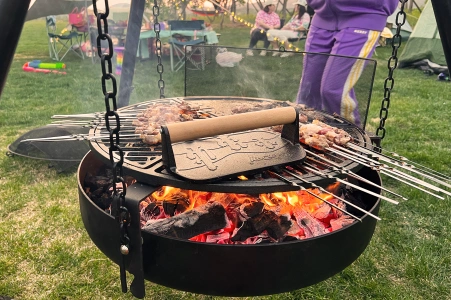
Dry Lubrication: Never use grease or wet oils on a tripod chain, as they attract ash and grit, leading to jamming. Use a dry graphite spray. This ensures a smooth glide when adjusting the height over a campfire tripod fire pit.

Corrosion and “Flash Rust”
Because tripods are exposed to smoke, moisture, and high heat, they can develop rust rapidly, especially in the joints and chain links.
The Solution: The Seasoning Shield
Treating the Apex: The top hinge of the tripod is the most vulnerable. Periodically wipe it down with the same oil you use for your cast iron wok set.
Storage: Never store a tripod while it is damp. If you are in the folding BBQ grill wholesale business, ensure your inventory is stored in a climate-controlled environment to maintain the factory finish of the hardware.
Uneven Cooking or Hot/Cold Spots
Symptoms
- Food burns in center but raw on edges
- Pot tilts → uneven heat
- Long cook times due to low effective heat
Why it happens
- Tripod height too high/low
- Coals unevenly spread
- Pot not centered
- Wind blowing heat away
- Thin grill surface warps
Solutions & Fixes
- Adjust chain height: 10–25 cm above coals for most grilling
- Rake coals into even bed/ring
- Center pot under apex
- Use wind shield or reposition grill
- Upgrade to thick cast iron griddle/plate from chinacastiron.com → high thermal mass evens heat

Recommended Setup for Maximum Reliability
Best overall system:
- Heavy-duty forged/reinforced tripod (200 lb+ rating) with wide stance, locking legs, adjustable chain
- Thick pre-seasoned cast iron grill pan, reversible griddle plate, or Dutch oven from chinacastiron.com
- Short chain → low center of gravity
- Wide foot pads or levelers
- Chain inspection & lubrication schedule
This combination handles 50–100 lb loads safely, provides excellent heat control, minimizes rust/smoke issues, and lasts decades with basic care.
Conclusion: Mastery of the Three Legs
Most tripod problems are a result of either poor-quality materials or a lack of understanding of thermal physics. By choosing a heavy-duty suspension system from and practicing preventative maintenance—such as using dry lubricants and managing thermal expansion—you turn a simple tool into a lifetime cooking partner.
Whether you are simmering a stew in a Dutch oven or searing on a griddle with high rim, a well-maintained tripod is the key to safety and culinary precision in the wild.
References and Sources
Mechanical Engineering Review (2025): Stress Analysis of Tripod Structures under Variable Thermal Loads.
Outdoor Culinary Safety Standards: Weight Distribution and Tip-Over Hazards in Primitive Kitchens (2026 Update).
Journal of Metallurgy: The Effects of Carbon Sequestration on Chain Link Tensile Strength.
National Camping Association: Preventing Soil Erosion and Fire Scarring with Elevated Suspension Systems.
China Cast Iron Engineering Department: User Manual for Professional Grade Sectional Suspension Hardware.