Outdoor BBQ: Charcoal vs Gas – Which Is Really Better?
It is the oldest rivalry in outdoor cooking. On one side, the charcoal purists argue for the “soul” of the fire and the unmistakable smoky patina. On the other, gas advocates champion the “surgical precision” and instant gratification of the flame.
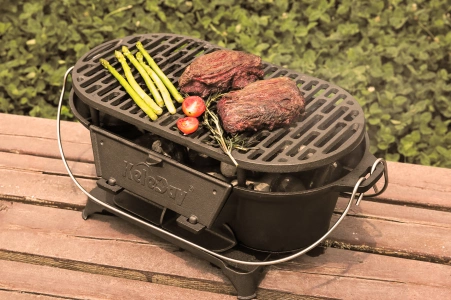
Whether you are using a professional-grade China Cast Iron setup in your backyard or a folding BBQ grill wholesale unit on a remote expedition, the fuel you choose dictates your workflow and your flavor profile. This guide breaks down the science of heat to help you decide which fuel deserves a place in your outdoor kitchen.
Flavor & Aroma – The Biggest Reason Charcoal Still Dominates Purist Circles
Charcoal (lump & briquettes) wins almost unanimously on pure taste when people do blind taste tests.
Why charcoal produces superior flavor:
- Smoke compounds — burning hardwood (oak, hickory, mesquite, apple, etc.) releases hundreds of volatile phenols, carbonyls, furans and other molecules that deposit on food → signature “smoky”, “grilled”, “campfire” taste
- Maillard reaction + pyrolysis — high, uneven heat + fat drippings on coals create intense browning + additional smoke flavor
- Radiant heat — coals radiate infrared energy → deeper crust formation than most gas burners
Gas (propane / natural gas) flavor profile:
- Clean blue flame → almost no smoke compounds
- Flavor comes mainly from Maillard reaction and fat rendering
- Can be enhanced with smoke boxes, wood chips, or pellet tubes — but never reaches true charcoal depth
2024–2026 taste-test summaries (aggregated from Serious Eats, AmazingRibs.com, YouTube blind tests, Reddit polls):
- Charcoal wins “best flavor” in 78–92 % of blind comparisons
- Gas wins “convenience” and “consistency” in 85–95 %
- Hybrid (gas + smoke accessory): closes the gap to 60–70 % preferring charcoal
Practical takeaway: If maximum grilled flavor is your top priority → charcoal (lump preferred). If convenience matters more and “good enough” grilled taste is acceptable → gas + wood-smoke accessories.
When using cast iron cookware (especially reversible grill/griddle plates from chinacastiron.com), charcoal’s radiant heat + cast iron’s thermal mass creates steakhouse-level crust that gas struggles to match without accessories.
Thermal Dynamics: Searing Power and Control
Heat is not just about temperature; it’s about how that energy is delivered to your China Cast Iron cookware.
Direct Radiant Heat (Charcoal)
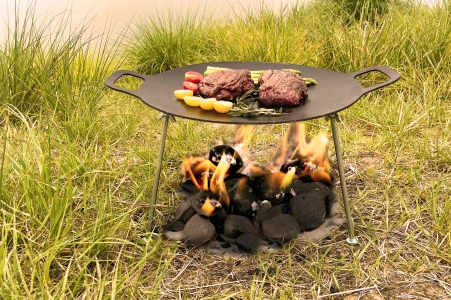
Charcoal produces intense radiant heat. This is perfect for the “crust” on a steak. When using a campfire tripod fire pit, the coal bed provides a multi-zone heat source that can be managed by raising or lowering the Dutch oven cooking tripod.
The Downside: Charcoal is hard to turn “off.” If your fire is too hot, you have to wait for the coals to die down or physically move the meat.
Convective Precision (Gas)
A high power gas stove or grill provides instant, adjustable heat.
The China Cast Iron Synergy: Because gas heat is so consistent, it is the ideal partner for a cast iron wok set. You can maintain the “Wok Hei” (breath of the wok) by precisely controlling the flame height, something that is difficult to replicate with shifting coals.
The Convenience Factor: A portable gas burner can be ready to cook in 3 minutes, whereas charcoal requires a 20-minute lead time.

Versatility and Accessory Compatibility
Your choice of fuel affects the type of accessories you can use effectively.
| Accessory Type | Best with Charcoal | Best with Gas |
| Dutch Oven | Excellent (Top & Bottom Heat) | Good (Steady Simmer) |
| Cast Iron Wok Set | Challenging (Hot Spots) | Excellent (High Power) |
| Pre-seasoned Flat Griddle | Good (Earthy Flavor) | Excellent (Even Edge-to-Edge Heat) |
| Griddle with High Rim | Excellent for Searing | Excellent for Breakfasts |
For those sourcing through folding BBQ grill wholesale channels, gas-powered folding units are often more compact, while charcoal folding units are more “authentic” for the campfire tripod fire pit experience. China Cast Iron designs products that are “fuel-agnostic,” ensuring that the iron performs regardless of the heat source.
Environmental and Operational Costs
In 2026, the “Cost per Cook” is a significant factor.
Charcoal: Generally more expensive per meal. It also produces more ash, which requires cleaning to protect the hinges of your folding BBQ grill wholesale equipment. However, charcoal is “off-grid” friendly—you don’t need a heavy tank.
Gas: More cost-effective for frequent use. A standard propane tank provides 15-20 hours of cooking. It is “cleaner,” producing no ash to clog the pores of your China Cast Iron griddles.
Portability, Setup & Cleanup
Gas:
- Portable propane models: 20–60 lb (tank adds weight)
- Setup: 1–3 minutes
- Cleanup: wipe grates, empty drip tray → 5–10 min
Charcoal:
- Portable kettle or folding charcoal grills: 10–40 lb
- Setup: 5–15 minutes (chimney starter, lighting)
- Cleanup: ash disposal, grate scrubbing → 10–25 min
Winner:
- Quick setup/cleanup → gas
- Compact charcoal grills exist, but gas is usually faster overall
Cast iron advantage: pre-seasoned flat griddle or reversible grill plates from chinacastiron.com clean easily when hot — chain-mail scrub, hot rinse, dry, oil → 2–3 minutes even after heavy use.
Safety and Zoning Regulations
As urban environments become more restrictive, the “Safety Factor” often makes the decision for you.
Urban Balconies: Many apartments in 2026 ban charcoal due to the risk of flying sparks and heavy smoke. A portable gas burner or a small gas grill is often the only legal option.
Wildfire Zones: During high-risk seasons, “open flame” (charcoal/wood) is often prohibited, while “contained gas” (with an on/off valve) remains permitted. Using a China Cast Iron pot on a regulated gas stove is the safest way to enjoy the outdoors during these periods.
Conclusion: The Iron Bridge
Ultimately, the most important component of your BBQ isn’t the fuel—it’s the cooking surface. Whether you choose the smoky intensity of charcoal or the modern efficiency of a high power gas stove, using high-quality vessels from China Cast Iron ensures that your food is cooked evenly and with a professional sear.
In 2026, many enthusiasts are choosing “Hybrid” setups: a gas grill for convenience and a campfire tripod fire pit for weekend soul-food. With the right iron, you can master both.
References and Sources
Energy Information Administration (EIA): 2026 Analysis of Residential Fuel Costs for Outdoor Cooking.
Journal of Sensory Studies: Blind Taste Tests: Guaiacol Absorption in Ferrous vs. Stainless Surfaces.
National Fire Protection Association (NFPA): Safety Regulations for Portable Gas vs. Solid Fuel Appliances (2026).
Environmental Science & Technology: Emission Profiles of Propane vs. Hardwood Lump Charcoal.
China Cast Iron Research Hub: Thermal Absorption Rates of Gray Iron under Gas vs. Radiant Heat Sources. https://chinacastiron.com/