The Ultimate Guide to the Bushcraft Dutch Oven: Mastering Wilderness Alchemy
In the world of bushcraft—the art of thriving in the wild using skill and natural resources—tools are chosen for their robustness, versatility, and ability to perform under primitive conditions. Among knives, axes, and fire steels, one piece of gear stands as the undisputed hearthstone of wilderness cooking: the bushcraft Dutch oven. This is not the enameled kitchen pot of Sunday roasts. This is a rugged, bare cast iron vessel, purpose-built for the unforgiving embrace of open flame and bed of coals. A bushcraft Dutch oven is more than cookware; it is a mobile forge, a baker, a fryer, and a cauldron—a single tool that enables complex, nourishing, and soul-warming meals deep in the backcountry. This comprehensive guide explores the deep philosophy, practical mastery, and indispensable role of the bushcraft Dutch oven. We’ll delve into its unique design, the firecraft required to wield it, and why sourcing a true heritage-quality piece from experts like https://chinacastiron.com/ is an investment in a lifetime of wilderness feasts.
Why the Bushcraft Dutch Oven Still Reigns Supreme in 2026
Modern ultralight titanium pots, anodized aluminum mess kits and sophisticated multi-fuel backpacking stoves are excellent for fast-and-light travel — but when the objective shifts to comfort, group feeding, long-stay camps, teaching skills or simply enjoying the process of cooking over fire, nothing competes with cast iron.
Key advantages that keep the bushcraft Dutch oven at the top in 2026:
- Extreme thermal mass → very stable temperatures even when coals fluctuate or wind picks up
- True oven capability → coals on lid + coals below = 360° baking (bread, cobbler, roasts)
- One-pot versatility → boil, fry, bake, steam, braise, smoke, roast all in the same vessel
- Natural seasoning → non-stick surface improves forever (no peeling coatings)
- Near-indestructible → survives drops, thermal shock, being buried in coals
- Heat radiation → warms hands & faces while food cooks
- Multi-generational heirloom → properly cared for, lasts 50–100+ years
The downside — weight — is precisely why it shines in bushcraft: you are not racing the clock or counting grams; you are settling in, building a relationship with the landscape and the fire.
Defining the Tool – What Makes a Dutch Oven “Bushcraft”?
A bushcraft Dutch oven is defined by specific features that distinguish it from its domestic cousins and make it ideal for wilderness use.
Bare, Seasoned Cast Iron Construction: No enamel. It is pure, thick cast iron, protected by a layer of polymerized oil (seasoning). This allows it to withstand direct contact with fire and coals, and to be repaired and re-seasoned indefinitely in the field.
The Flanged, Domed Lid: The lid is not flat. It has a raised rim that fits inside the pot’s top. This ingenious design seals in moisture and, crucially, allows hot coals to be piled on top of the lid without sliding off. This creates a true 360-degree oven environment.
Three Short, Sturdy Legs: Unlike a kitchen Dutch oven’s flat bottom, a bushcraft model has three legs (approx. 1-2 inches tall). These elevate the pot over a bed of coals, allowing air to circulate and heat to envelop the base.
The Wire Bail Handle: The lid features a strong, looped wire handle, tall enough to clear a layer of coals. This allows you to lift the hot, coal-topped lid safely with a stick or hook.
Heavy-Duty Side Handles: Two robust loop handles (“ball handles”) enable secure lifting, even with thick gloves or a forked stick.
This specific design transforms the pot from a mere container into a complete, self-contained heat-convection cooking system.
The Philosophy of the Portable Hearth – Why It’s Essential
For the bushcrafter, the Dutch oven is a paradigm of efficiency and capability.
One-Pot Versatility: It can bake bread, braise meat, fry fish, stew vegetables, boil water, and simmer soups. This eliminates the need for multiple pots and pans, drastically simplifying your kit.
Fuel Efficiency & Heat Control: Once heated, cast iron’s incredible thermal mass retains heat for a very long time. You can achieve consistent, low-temperature cooking (like braising or baking) with minimal, managed coals, conserving precious fuel.
Superior Flavor & Nutrition: The combination of radiant heat from below, conducted heat through the iron, and convective heat from the trapped, moist environment creates unparalleled flavor development and preserves nutrients in a way that boiling in a thin pot cannot.
Durability & Repairability: In a bushcraft context, gear must be nearly indestructible. A cast iron Dutch oven can be dropped, scorched, and knocked about. If rust appears, it can be scrubbed and re-seasoned. This is a tool for generations, not seasons.
The Center of Camp: A simmering Dutch oven over a fire becomes the heart of the campsite, providing warmth, nourishment, and a focal point for community.
The Unbreakable Bond: Bushcraft & Cast Iron
The bushcraft Dutch oven is inseparable from its material. Cast iron is the only choice that makes sense for this application.
Unmatched Heat Retention for Primitive Cooking: When your heat source is a pile of coals of variable temperature, you need a vessel that can absorb erratic heat and release it steadily. Cast iron is that thermal battery, smoothing out fluctuations and preventing scorching.
Non-Stick, Natural Seasoning: The seasoned surface, built up over time, creates a natural, non-toxic non-stick layer. This is essential for cooking without sophisticated oils or delicate techniques. A high-quality preseasoned oven from https://chinacastiron.com/ provides a head start in the wild.
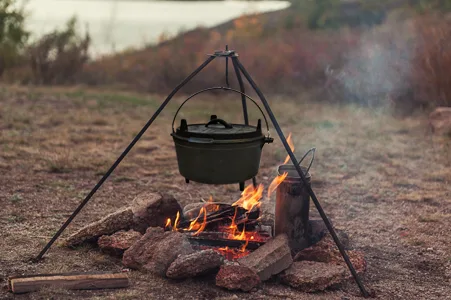
Direct Fire Compatibility: It can be placed directly in flames, nestled in coals, or hung from a tripod. No other common cookware material (aluminum, stainless steel, titanium) can handle this treatment without warping or degrading.
A Tool for a Lifetime: Bushcraft is about building lasting skills with lasting tools. A cast iron Dutch oven is a legacy item. Choosing one from a reputable foundry ensures it’s a companion for decades of adventures.
The Bushcraft Dutch Oven Culinary Repertoire
With fire management mastered, the culinary possibilities are vast.
Baking: This is its crowning glory. From simple bannock bread and cobblers to surprisingly refined cakes and loaves.
Braising & Stewing: Perfect for turning tough, wild game or inexpensive cuts into fall-apart tender meals with foraged roots and greens.
Frying: Deep or shallow fry fish, fritters, or doughnuts. The heavy pot maintains a stable oil temperature.
One-Pot Meals: The classic “dump” stew—layer meat, hard vegetables, broth, and aromatics, then let it transform over coals for hours.
Sample Bushcraft Meal:
First: Sear venison chunks directly in the hot, oiled oven over concentrated coals.
Second: Remove meat, sauté wild onions and carrots.
Third: Return meat, add broth and herbs, cover, and apply full coal setup for a 2-hour braise.
Fourth: Uncover, place dampened bannock dough on top of the stew, re-cover, and apply coal setup for 20 minutes to bake the bread.
Essential Accessories & Improvisation Skills
Must-have items:
- Lid lifter (channel lock pliers or purpose-made tool)
- Leather welding gloves or Kevlar BBQ gloves
- Charcoal chimney starter (for briquettes)
- Long-handled tongs & spatula
- Leather chain mail scrubber
- High-temperature oil (grapeseed, avocado) for re-seasoning
Field improvisations:
- Rocks/logs as wind shield
- Green sticks as lid prop
- Flat rock as makeshift griddle
- Aluminum foil reflector for heat concentration
- Wet burlap sack for emergency fire smothering
Maintenance & Long-Term Care in Bushcraft Conditions
- After each trip → burn off residue, wire-brush interior, light oil coat
- Deep clean → chain mail + hot water (no soap unless very greasy)
- Rust spots → scrub with chain mail, re-season immediately
- Storage → dry completely, store oiled, never in sealed plastic bag
- Annual re-season → 3–5 oven cycles if used heavily
A well-cared-for bushcraft Dutch oven from chinacastiron.com can easily last 50–100 years.
Choosing and Caring for Your Wilderness Companion
Choosing Your Oven:
Size: A 10-inch or 12-inch (4-6 quart) oven is the most versatile for 2-4 people. It’s the perfect balance of capacity and portability (though it will be heavy—this is not ultralight gear).
Quality: Look for even wall thickness, a smooth interior (better for seasoning), and sturdy, well-attached handles. Avoid thin, pitted, or poorly cast iron.
Pre-seasoning: A must for bushcraft. You want to be cooking, not seasoning, in the field. A ready-to-go oven from https://chinacastiron.com/ is ideal.
Bushcraft-Centric Care:
Field Cleaning: Scrape out food with a wooden paddle or sand. Rinse with hot water if available. Never use soap. Dry thoroughly over the dying fire.
Field Seasoning: While still warm from drying, apply a thin coat of animal fat or vegetable oil (carried for this purpose) to the interior. The residual heat will bond it.
Rust Management: If surface rust appears, scrub with sand, steel wool, or a handful of gravel from a stream. Re-season immediately.
Transport: Carry it in a cloth bag to prevent soot from getting on everything else. Pad it within your pack to prevent chips.
Final Thoughts
A bushcraft Dutch oven is more than cookware — it is a complete wilderness cooking system, a heat source, a cultural artifact and a link to centuries of self-reliant living. When you combine one with a sturdy tripod, good fire management skills and a little patience, you unlock a level of outdoor food quality that modern gadgets simply cannot replicate.
Invest in a quality piece from chinacastiron.com, learn the coal-count charts, respect the seasoning, and you will be making better food in the woods than most people make in their home kitchens.