The Bushcraft Outdoor Fire Pit: The Altar of Flame and Heart of Survival in Primitive Skills
In an age of GPS, lightweight tents, and freeze-dried meals, our connection to the most fundamental element of the wilderness—fire—can become distant. Yet, for practitioners of Bushcraft, fire has never lost its central place. A skillfully built Bushcraft outdoor fire pit is far more than a place to make a fire; it is an altar, a tool, a social hub, and a source of warmth, light, and safety in the wild.
Mastering the art of building and using a Bushcraft outdoor fire pit is the gateway to a deeper wilderness experience and true self-reliance. It is about not just surviving, but thriving in a way that is respectful, intelligent, and connected to ancient traditions.
What Is a Bushcraft Outdoor Fire Pit?
A bushcraft outdoor fire pit is a compact, durable metal structure designed for:
Wilderness cooking
Open-fire heating
Primitive or survival-style camping
Long-term outdoor use
High-temperature wood burning
Use with tripods, grills, cast iron cookware, and Dutch ovens
Bushcraft fire pits must meet higher durability standards than regular backyard fire pits, since they are often used in rugged environments like forests, mountains, riversides, and off-grid camps.
Why Bushcraft Enthusiasts Prefer Specialized Fire Pits
Bushcraft campers often avoid complex fuel systems. Instead, they rely on:
Natural wood
Charcoal
Bamboo
Fallen branches
This requires a fire pit that is:
1. Extremely durable
Bushcraft involves high-temperature open fires for long periods. Metal must withstand repeated heating cycles.
2. Portable and practical
Many bushcrafters move campsites frequently, requiring foldable or lightweight designs.
3. Multi-purpose
A good bushcraft outdoor fire pit can:
Boil water
Cook meat or fish
Support cast iron griddles
Hold a Dutch oven
Support grilling and roasting
Provide night-time heating
4. Weather-resistant
Rain, humidity, and mud are all part of bushcraft. The fire pit must be weather-resistant and corrosion-resistant.
The Philosophy of the Bushcraft Fire Pit – A Skill Beyond Survival
1. Definition and Core Principles
A true Bushcraft outdoor fire pit embodies the following principles:
Minimal Impact: Designed with the intention of restoring the site when you leave.
Resourcefulness: Built using materials found on-site or carried minimally.
Efficiency: Designed to maximize heat output, cooking capability, and fuel efficiency while minimizing smoke and danger.
Adaptability: Its form changes based on need, weather, terrain, and available resources.
Purposefulness: It is built for a specific reason—warming, cooking, signaling, or tool-making.
The Anatomy of a Purpose-Built Fire Pit
Unlike a simple ring of stones, a Bushcraft outdoor fire pit is an engineered thermal system.
1. Location, Location, Location
The first and most critical skill is site selection.
Safety First: Away from overhanging branches, dry grass, roots, and tents (at least 15 feet/4.5 meters). On mineral soil, sand, or rock if possible.
Wind Management: Use natural windbreaks (a rock, a bank) or position the pit so the wind aids airflow without scattering embers.
Water Proximity: Ideally near water for safety and convenience, but not so close as to risk contaminating it.
Existing Sites: Always use an established fire ring if available to concentrate impact.
2. Classic Bushcraft Fire Pit Designs
1. The Keyhole Fire Pit:
Design: A main circular fire chamber with a narrow “keyhole” or trench extending from one side.
Function: The main chamber holds the fire for heat and light. Coals are raked into the keyhole trench to create a stable, concentrated heat source for cooking pots. This separates cooking from the active flame.
Best for: Groups and extended camp cooking.
2. The Dakota (Rocket) Fire Hole:
Design: Two interconnected holes dug about 1 foot (30 cm) deep. The main fire chamber and a smaller air intake hole about 1 foot away, connected by a tunnel at the base.
Function: Creates a powerful draft, burning very hot and efficiently with minimal smoke and light signature. Excellent in windy conditions or for discretion.
Best for: Survival situations, windy plains, efficient boiling.
3. The Trench Fire Pit:
Design: A long, narrow trench, roughly the length of a firelog.
Function: Excellent for cooking multiple pots along its length or for providing warmth to people lying alongside it. Align with the wind for optimal draft.
Best for: Linear camps, cooking for many, extremely cold conditions.
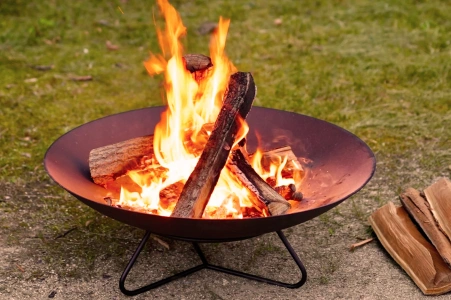
4. The Council/Star Fire:
Design: A central fire with large logs arranged like wheel spokes, pushed in as they burn.
Function: A low-maintenance, long-burning fire for warmth and light, perfect for gatherings. Not ideal for cooking.
Best for: Social fires, base camps, cold nights.
The Art of Fire – Fuel, Ignition, and Management
1. The Sacred Trinity: Tinder, Kindling, Fuel
Tinder: The initial spark-catcher. Bone-dry, fluffy materials (birch bark, cedar bark, fatwood shavings, bird’s nest of dry grass).
Kindling: Small twigs and sticks (pencil to finger thickness) that grow the flame from tinder to fire.
Fuel Wood: The main burning material. Hardwoods (oak, maple, hickory, ash) burn hot and long, making excellent coals for cooking. Softwoods (pine, fir, spruce) ignite easily and burn fast with a bright flame, good for quick heat but smoky.
2. Ignition – From Primitive to Modern
The ultimate bushcraft skill is creating fire from scratch. Methods include:
Ferrocerium Rod (Ferro Rod): The modern bushcraft standard. Shaves off ultra-hot sparks (3000°F/1650°C) onto tinder. Works in all conditions.
Flint and Steel: A traditional method using high-carbon steel struck against flint to create sparks.
Friction Fire: Bow drill or hand drill. The pinnacle of primitive skill, requiring perfect technique, materials, and conditions.
Solar: Using a lens (magnifying glass, eyeglasses, or an ice lens) to focus sunlight onto tinder.
3. Fire Management for Cooking
This is where a Bushcraft outdoor fire pit shines. The goal is a bed of hot coals, not towering flames.
Creating Coals: Build a robust fire and let it burn down. Hardwoods are best for this.
Heat Control: Rake coals to create zones—a thick bed for high-heat searing/boiling, a thin scattering for simmering.
The Pot Support: This is where bushcraft meets cooking. Use green (non-flammable) logs as pot rails, place pots directly on coals, or use a tripod.
To explore timeless cast iron cookware, like Dutch ovens and skillets, that are perfectly designed to harness the steady, radiant heat of your Bushcraft outdoor fire pit, you can visit https://chinacastiron.com/. A well-seasoned Dutch oven transforms a bed of coals into a wilderness oven.
Types of Bushcraft Outdoor Fire Pits
Below are the most popular product categories in the industry.
A. Foldable Mesh Fire Pit
Lightweight stainless steel mesh with collapsible legs.
Advantages:
Ultra-portable
Suitable for backpacking
Burns cleanly with good airflow
This category is popular among minimalist campers.
B. Steel Bushcraft Fire Pit
Carbon-steel plate construction, often flat-packed.
Advantages:
Durable
Easy to assemble
Higher heat tolerance
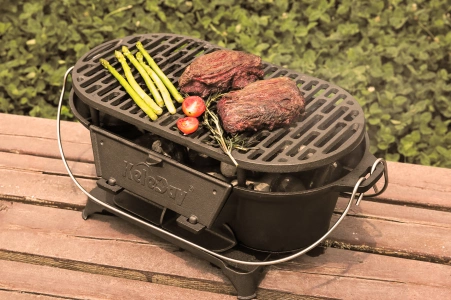
C. Cast Iron Bushcraft Fire Pit
Thick cast iron provides extreme durability and excellent heat retention.
Advantages:
Superior cooking performance
Perfect for steaks, Dutch ovens, and pan-frying
Long lifespan
Find cast iron models at https://chinacastiron.com/.
D. Multi-Functional Fire Bowl
Allows grilling, boiling, frying, and heating in one setup.
Features:
Adjustable grates
Strong support for heavy pans
Suitable for group camping
E. Smokeless Bushcraft Fire Pit
Double-wall airflow technology reduces smoke.
Benefits:
Cleaner burn
Eco-friendly
More efficient wood consumption
F. Tripod-Compatible Fire Pit
Designed for survival-style cooking with:
Tripods
Hanging Dutch ovens
Cast iron kettles
Cast iron cookware at https://chinacastiron.com/ pairs perfectly with these pits.
How to Use a Bushcraft Outdoor Fire Pit Safely
Step 1: Choose a Safe Location
Avoid:
Overhanging branches
Dry grass
Wind-prone areas
Step 2: Build a Stable Wood Base
Use:
Dry hardwood
Small twigs
Natural kindling
Step 3: Maintain Airflow
Do not overload wood. Allow oxygen flow.
Step 4: Use Proper Cookware
Best options:
Cast iron Dutch ovens
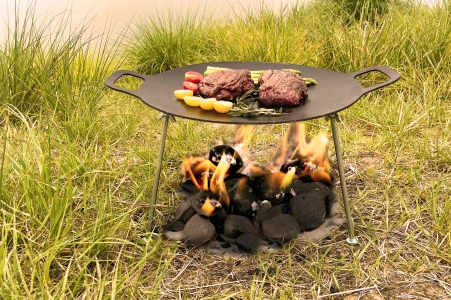
Flat griddles
Tripod cooking setups
All available at https://chinacastiron.com/.
Cooking Techniques With a Bushcraft Outdoor Fire Pit
1. Direct Flame Cooking
Ideal for:
Kebabs
Grilled fish
Campfire steaks
2. Coal Bed Cooking
Perfect for:
Dutch ovens
Slow-roasting meats
3. Pan Frying With Cast Iron
Flat skillets and griddles distribute heat evenly.
4. Boiling & Stew Cooking
Using tripods and hanging pots.
5. Ember Cooking
A primitive technique for root vegetables and foil-wrapped food.
Conclusion: The Hearth of Human Experience
The Bushcraft outdoor fire pit represents a profound connection. It connects us to the countless generations before us who huddled around flames for the same reasons we do today: warmth, safety, community, and the transformation of raw ingredients into nourishment.
Building and tending a proper fire pit slows us down, demands our attention, and rewards us with a deep, quiet satisfaction that a flick of a lighter or the turn of a stove knob can never provide. It is the first and most important technology, and in mastering it, we master a piece of ourselves and our place in the natural world.
So, next time you’re in the woods, don’t just make a fire. Build a Bushcraft outdoor fire pit. Tend it with respect. Cook over its coals. And when you’re done, ensure that only the memory of its warmth and light remains.