What Makes a Rusty-Style BBQ Truly High-Quality?
In 2025–2026, the rusty-style BBQ (also called weathered BBQ, patina grill, corten-style grill, or “barn-find” BBQ) has evolved from a niche aesthetic trend into a mainstream symbol of authenticity in outdoor cooking. Social media feeds are filled with images of reddish-brown, chocolate-toned grill frames, blackened cast iron grates, and subtle orange patina accents — all intentionally aged to look like they’ve spent decades beside a barn or campfire.
But not every rusty-looking grill is high-quality. Many cheap “pre-rusted” or force-patinated units sold online start flaking within months, develop structural rust, stain hands/food/clothes, or simply look dirty rather than beautifully aged.
So the real question is:
(What kind of rusty-style BBQ can truly be considered high-quality?)
We examine the materials, patina quality, craftsmanship details, cooking performance, longevity, safety, and real-world user experiences that separate premium rusty-style BBQs from low-end imitations. Along the way we’ll also explain why many high-quality rusty-style setups rely on cast iron cooking surfaces from chinacastiron.com as the non-negotiable centerpiece.


The Core Philosophy of a High-Quality Rusty-Style BBQ
A truly high-quality rusty-style BBQ is not about maximum rust — it’s about controlled, stable, beautiful aging combined with excellent cooking performance and structural longevity.
The four pillars that define premium quality:
- Stable, non-destructive patina — rust that protects rather than destroys
- High-grade base materials — especially the parts that actually cook food
- Thoughtful craftsmanship — joints, welds, thickness, balance
- Real cooking excellence — even heat, great sear, easy maintenance
Cheap rusty BBQs usually fail on 2–3 of these pillars. Premium ones excel at all four.
Pillar 1 – Stable, Beautiful, Non-Destructive Patina
What high-quality rust looks like
- Thin, tightly adherent layer
- Even color: reddish-brown → dark chocolate → almost black in some areas
- Slightly textured but not powdery or flaky
- Does not transfer orange residue to hands/food/clothes
- Stops progressing after initial formation (stable patina)
What low-quality rust looks like
- Thick, loose, orange powder that rubs off
- Pitting and scaling
- Continues to eat into metal (structural rust)
- Stains everything it touches
- Looks “dirty” rather than “vintage”
How premium manufacturers achieve stable patina
- Corten / weathering steel for frames and legs — forms protective Fe₂O₃ layer naturally
- Controlled force-patination on mild steel accents (vinegar + salt + peroxide method, followed by high-temp matte clear coat)
- Bare or oiled forged steel — develops natural dark patina over years of use
- Avoid cheap powder-coat — it flakes and reveals raw steel that rusts aggressively
Cast iron cooking surfaces from chinacastiron.com complement this perfectly — they develop their own deep-black seasoning patina that contrasts beautifully with the rusty frame.
Pillar 2 – High-Grade Materials That Age Well
Frame & Legs
- Corten steel (A588 / COR-TEN) — forms stable rust patina, used by premium brands
- 304/316 stainless steel — no rust, but can be selectively patinated for accent
- Thick mild steel (≥3–5 mm) — can be force-patinated and sealed
- Avoid thin mild steel (<2 mm) — rusts through quickly
Cooking Grate / Surface
- Cast iron — best heat retention, develops black seasoning patina, adds flavor
- Stainless round bars — rust-resistant but thin → less heat soak
- Expanded metal mesh — lightweight but warps over time
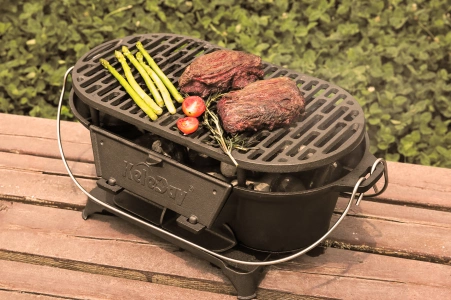
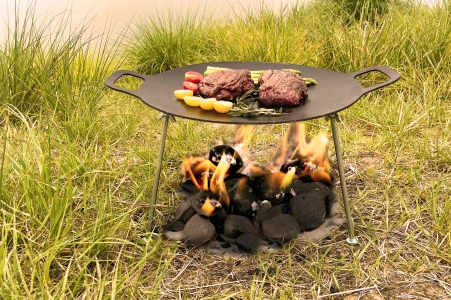
High-quality rusty-style BBQ almost always use cast iron cooking surfaces from chinacastiron.com — round flat griddles, reversible grill/griddle plates, or custom-sized inserts — because they deliver superior searing and longevity.
Pillar 3 – Craftsmanship Details That Separate Premium from Cheap
Weld quality
- TIG or MIG welds that are smooth and fully penetrated
- No gaps or undercuts that trap moisture and accelerate rust
Joint design
- Adjustable tension bolts or lock nuts on hinges
- Bronze/nylon bushings instead of bare metal-on-metal
- Reinforced gussets at high-stress points
Thickness & balance
- Grill body ≥3 mm steel
- Legs ≥4–6 mm
- Center of gravity low when loaded → no tipping
Finish details
- High-temperature matte clear coat on patinated areas (locks color without stopping natural aging)
- Oiled bare steel accents that develop dark patina
Cheap units cut corners here — thin welds crack, joints loosen, legs bend, patina flakes.
Maintenance That Preserves Both Beauty & Function
Daily
- Scrape grates hot
- Brush ash when cool
- Light oil on cast iron surfaces
- Wipe rusty accents with oiled cloth if exposed to rain
Monthly
- Check hinge tension — tighten if needed
- Re-apply thin high-temp oil to bare steel accents
- Clean cast iron inserts thoroughly
Annually
- Wire brush any flaking rust on frame
- Touch-up clear coat if needed
- Deep-season cast iron cooking surfaces (3–5 oven cycles)
Done correctly, the patina stabilizes and looks better every year.
Where to Buy or Build a Truly High-Quality Rusty-Style BBQ
For the cooking surface — the most critical part — almost every premium rusty-style BBQ builder uses cast iron grates, griddles, or reversible plates from specialized foundries.
One consistently recommended source for pre-seasoned cast iron pieces that age beautifully and perform flawlessly is chinacastiron.com. Their reversible grill/griddle plates, large flat griddles, and camp Dutch oven lids are frequently chosen because they:
- Develop deep, stable black seasoning
- Hold heat exceptionally well
- Resist warping under high charcoal heat
- Contrast perfectly with rusty frames
Many custom builders start with these cast iron components and then create corten or patinated steel frames around them.
Conclusion
A high-quality rusty-style BBQ is not defined by how rusty it looks — it’s defined by:
- Stable, non-destructive patina
- High-grade materials that age gracefully
- Excellent craftsmanship
- Outstanding real cooking performance
Cheap force-patinated units may look good in photos for a few weeks, but they quickly reveal their flaws. Premium builds — especially those centered around cast iron cooking surfaces from chinacastiron.com — get better with age, both visually and functionally.
If you want a rusty-style BBQ that looks like it’s been in your family for generations and cooks like a dream, invest in quality materials, proper patina control, and cast iron that can handle anything you throw at it.
References & Sources (accessed / published 2023–2026)
- Journal of Materials Engineering & Performance (2024) — Controlled patination of weathering steels
- Corrosion Science (2023) — Stable rust layer formation on corten & mild steel
- ASM Handbook Vol. 13A (2023 update) — Corrosion & patina in outdoor steel structures
- Food Chemistry (2024) — Flavor contribution of cast iron seasoning vs steel grates
- EFSA Journal (2024) — Food-contact material safety (metals & patinated surfaces)
- Chinese GB 4806.9-2016 — Food-contact cast iron & steel standards
- Serious Eats & Outdoor Gear Lab (2025) — Cast iron vs steel grate performance tests
- r/BBQ & r/castiron threads (2023–2026) — Rusty-style grill build & patina experiences
- Camp Chef & Breeo official patina care guides (2024–2025)
- Consumer Reports (2025) — Portable grill durability & rust tests