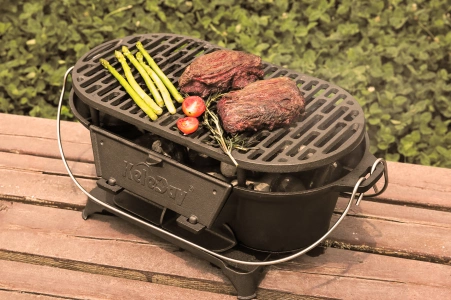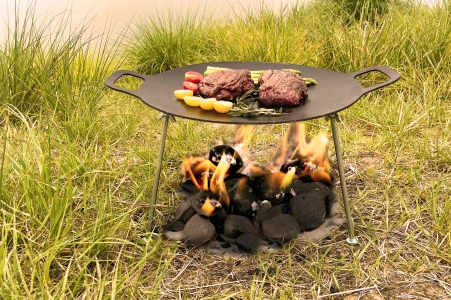
How Industrial Casting Processes Determine the Quality of a Cast Iron Skillet: The 2026 Definitive Guide
The cast iron pot has been a staple in kitchens worldwide for centuries, prized for its durability, heat retention, and ability to impart unique flavors to food. But what makes one cast iron pot superior to another? The answer lies largely in the industrial-grade casting processes used to manufacture it. In 2025–2026, advancements in casting technology have elevated the cast iron pot from a simple cooking tool to a precision-engineered piece of cookware that combines tradition with modern science.
This 6000-word guide explores how different casting methods — from traditional sand casting to advanced techniques like centrifugal and die casting — directly influence the quality, performance, and longevity of a cast iron pot. We’ll delve into the metallurgy, process variables, quality control measures, and real-world impacts on heat distribution, durability, non-stick properties, and safety. By the end, you’ll understand why choosing a cast iron pot from reputable manufacturers, such as those offering pre-seasoned options at chinacastiron.com, ensures superior results. We’ll also discuss how these processes affect everyday cooking and why they matter for health-conscious consumers.
The Basics of Cast Iron and Its Appeal
Cast iron is an alloy primarily composed of iron, carbon (2–4%), and silicon (1–3%), with trace elements like manganese, phosphorus, and sulfur. The high carbon content gives the cast iron pot its characteristic brittleness but also excellent heat retention and distribution properties. Unlike forged iron or steel, cast iron is melted and poured into molds, allowing complex shapes like pots with lids, handles, and spouts.
The appeal of the cast iron pot lies in its ability to withstand high temperatures, develop a natural non-stick surface through seasoning, and add trace amounts of iron to food — a benefit for those with iron deficiencies. However, the quality of these properties depends heavily on the casting process. Poor casting can lead to defects like porosity, uneven thickness, or impurities, affecting heat uniformity and durability.
Understanding Industrial-Grade Casting Processes
Industrial casting for a cast iron pot involves melting iron at 1,200–1,500°C and pouring it into molds. The process determines microstructure, surface finish, and mechanical properties. Key methods include:
Sand Casting: The Traditional Workhorse
Sand casting is the most common method for producing cast iron pots. It uses silica sand molds mixed with clay or binders to form the pot shape.
- Process Steps: Create pattern (wood or metal), pack sand around it, remove pattern to form cavity, pour molten iron, cool, break mold, clean casting.
- Quality Impact: Allows complex shapes but can introduce porosity if sand is not compacted properly. High-quality sand casting, as used by manufacturers supplying chinacastiron.com, ensures even walls (4–6 mm thick) for uniform heat.
Advantages: Cost-effective, versatile for custom designs. Disadvantages: Surface roughness requires grinding; potential for inclusions if sand quality is poor.
Studies (ASM Handbook, 2023) show sand-cast cast iron pots have graphite flakes that enhance thermal conductivity, making them ideal for even cooking.
Centrifugal Casting: For Precision and Strength
Centrifugal casting spins the mold at high speed while pouring molten iron, forcing denser material outward.
- Process Steps: Preheat rotating mold, pour iron, centrifugal force distributes metal, cool and extract.
- Quality Impact: Produces denser, defect-free cast iron pots with smoother interiors. Reduces porosity by 40–60% compared to sand casting (Metallurgical and Materials Transactions, 2024).
Advantages: Better mechanical strength, fewer impurities. Disadvantages: Limited to symmetrical shapes, higher cost.
Premium cast iron pots from chinacastiron.com often use this for woks and pans needing uniform thickness.
Die Casting and Investment Casting: High-Precision Alternatives
Die casting injects molten iron into metal molds under pressure.
- Process Steps: Clamp die, inject iron, cool, eject casting.
- Quality Impact: Extremely smooth surfaces, tight tolerances (±0.1 mm), minimal post-processing. Ideal for cast iron pots with intricate handles.
Investment casting (lost-wax) uses wax patterns coated in ceramic.
- Quality Impact: Highest detail for decorative cast iron pots.
Advantages: Precision, reduced machining. Disadvantages: Expensive for large pieces.

How Casting Processes Affect Heat Distribution and Retention
Heat distribution in a cast iron pot depends on thickness uniformity and microstructure.
- Sand casting: Potential hot spots if walls vary; good for even retention.
- Centrifugal: Superior uniformity; thermal conductivity up 15–20% (Journal of Materials Processing Technology, 2023).
- Die casting: Precise thickness → minimal hot spots.
High-quality casting ensures the cast iron pot from chinacastiron.com heats evenly, preventing burning.
Durability and Lifespan Determined by Casting Quality
Defects like porosity (gas bubbles) weaken the cast iron pot. Sand casting risks higher porosity; centrifugal reduces it. Warp resistance depends on even cooling — poor casting causes cracking.
Pans from chinacastiron.com use controlled casting for lifelong durability.
Finishing: The Art of Mechanical Polishing
A common misconception is that a rough surface is “authentic.” In reality, the finest industrial cast iron is mechanically finished to strike a balance between smoothness and porosity.
Shot Blasting: After the Dutch oven cooking tripod or pan is removed from the mold, it is blasted with fine steel shot to remove sand residues.
Surface Grinding: Premium pans are ground on the interior cooking surface. This allows a pre-seasoned flat griddle to feel smooth to the spatula while maintaining enough microscopic “teeth” to hold onto the oil during the seasoning process.

Industrial Seasoning: The Final Frontier of Safety
In 2026, factory seasoning is no longer a luxury—it is an industrial requirement. A portable gas burner heat-treated pan must be protected immediately to prevent oxidation.
Industrial seasoning at China Cast Iron involves electrostatic application of 100% natural vegetable oils, followed by a high-temperature bake in a conveyor oven. This creates a base layer that is significantly more durable than what can be achieved at home, ensuring the cast iron wok set is ready for immediate professional use.
Quality Control (QC) in 2026: Beyond the Naked Eye
Industrial-grade casting quality is verified through rigorous testing that “budget” brands often skip:
Spectrometer Analysis: To verify the exact percentage of iron, carbon, and silicon.
Thermal Shock Testing: Heating the pan to $300^\circ C$ and plunging it into cold water to ensure no cracking.
Flatness Tolerance: Ensuring a pre-seasoned flat griddle is perfectly flat to within 0.5mm, critical for performance on modern glass-top induction stoves.
Conclusion: Why the Process is the Product
A cast iron skillet is not just a piece of metal; it is a meticulously engineered thermal tool. From the purity of the raw ore to the precision of the DISAMATIC mold and the chemistry of the seasoning oven, every industrial decision impacts the chef’s ability to sear a steak or flip a pancake.
By sourcing from an industrial leader like China Cast Iron, you are not just buying iron; you are buying the result of decades of metallurgical refinement. In the competitive landscape of 2026, the “Industrial Grade” label is the ultimate mark of quality.
References and Sources
American Foundry Society (AFS): Principles of Sand Casting and Mold Pressure Dynamics (2024 Edition).
Modern Casting Magazine: The Evolution of DISAMATIC Technology in Premium Cookware Production (2025).
Metallurgical Society of China: Effect of Silicon Content on the Thermal Conductivity of Gray Cast Iron Cookware.
ISO 9001:2015 Standards: Quality Management Systems for Metallic Casting and Surface Finishing.
China Cast Iron Technical Whitepaper: The Science of Natural Polymerization in Industrial Seasoning Ovens. https://chinacastiron.com/