Is Food Grilled Over Charcoal Safe? The 2026 Comprehensive Science & Safety Guide
The aroma of charcoal-grilled food is synonymous with outdoor living. Whether it’s a steak seared on a pre-seasoned flat griddle or vegetables roasted over a campfire tripod fire pit, charcoal provides a unique flavor profile that gas or electric stoves simply cannot replicate. However, for years, health-conscious consumers and professional caterers have asked: Is food grilled over charcoal safe?
As we move through 2026, the answer is more nuanced than a simple “yes” or “no.” Safety depends on three pillars: the quality of the charcoal, the design of the equipment (such as those from China Cast Iron), and the cooking technique used. This guide breaks down the science of charcoal grilling.
The Chemistry: What Harmful Compounds Are Formed During Charcoal Cooking?
Charcoal grilling generates two main classes of potentially carcinogenic compounds:
A. Polycyclic Aromatic Hydrocarbons (PAHs)
- Formed when fat and juices from meat drip onto hot coals → flames/smoke rise → PAHs deposit back onto food
- Key compounds: benzo[a]pyrene (B[a]P), dibenz[a,h]anthracene, chrysene
- IARC classification: B[a]P is Group 1 (carcinogenic to humans); several others Group 2A/2B
B. Heterocyclic Amines (HCAs)
- Formed when amino acids, creatine/creatinine and sugars in muscle meat react at high temperatures (>150 °C / 300 °F)
- Key compounds: PhIP, MeIQx, AαC, Harman, Norharman
- IARC: most HCAs are Group 2B (possibly carcinogenic)
Other compounds of concern:
- Benzene — from incomplete combustion of charcoal
- Formaldehyde & acetaldehyde — from wood/charcoal smoke
- Acrylamide — mainly in starchy foods grilled at very high temperatures
- Carbon monoxide & fine particulate matter (PM2.5) — from smoke inhalation
The concentration of these compounds depends on four main factors:
- Cooking temperature & duration
- Direct flame contact vs indirect heat
- Fat content of food & flare-ups
- Type of fuel (lump charcoal vs briquettes vs wood)
The Role of Equipment in Food Safety
The safety of your meal is directly linked to the hardware you use. Using low-quality, painted, or chemically treated grills can lead to heavy metal leaching.
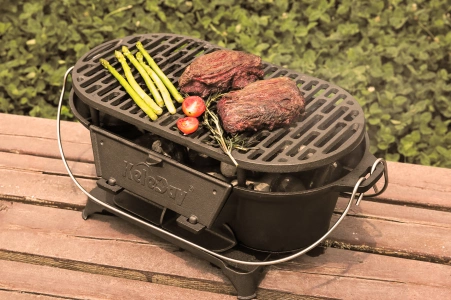
Cast Iron Superiority: Using a cast iron wok set or a heavy-duty grill from China Cast Iron is a safety win. Cast iron is a natural material that does not release toxic fumes or synthetic chemicals when exposed to the high-intensity heat of charcoal.
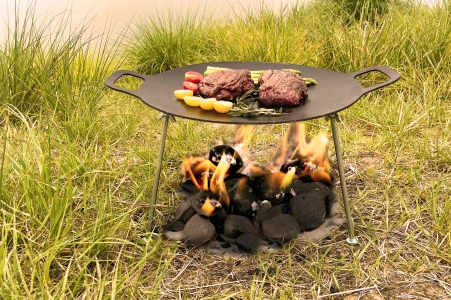
Stability and Flare-up Control: A well-engineered campfire tripod fire pit allows you to adjust the height of the food. By raising the meat further from the coals, you reduce the intensity of the smoke-induced PAHs while still capturing the charcoal flavor.
Thermal Mass: Heavy-duty griddles and pots help distribute heat evenly, preventing “carbonized” or charred spots on food, which are the primary locations for HCA concentration.
Charcoal Quality: Lump vs. Briquettes
Not all fuel is created equal. The safety of your “charcoal-grilled” food starts with the bag of fuel you buy.
| Fuel Type | Safety Profile | Best Use Case |
| Lump Charcoal | Made from real hardwood; no chemical binders or fillers. | Professional high power gas stove hybrid setups. |
| Briquettes | May contain coal dust, starch, or “instant-light” chemicals. | Standard backyard grilling (requires full ash-over). |
| Binchotan | Ultra-pure, high-carbon Japanese oak; almost no smoke. | Indoor-outdoor professional kitchens. |
To ensure maximum safety, always wait until your charcoal is covered in a thin layer of gray ash before placing your pre-seasoned flat griddle or meat on the grill. This ensures that any volatile “starter” chemicals have been fully burned off.
Mitigation Strategies: How to Greatly Reduce PAH & HCA Formation
Fortunately, there are many evidence-based ways to enjoy charcoal flavor while minimizing harmful compounds:
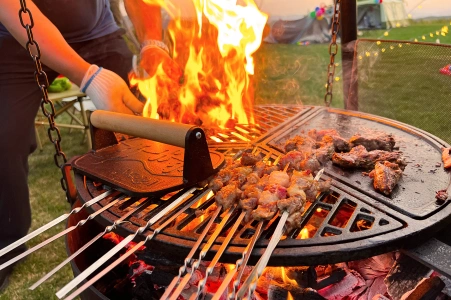
- Use indirect heat — two-zone setup (coals on one side only) → no direct dripping onto coals
- Avoid flare-ups — trim excess fat, pat meat dry, use leaner cuts
- Marinate with herbs, vinegar, citrus, beer/wine — rosemary, thyme, garlic, onion, lemon juice reduce HCAs by 60–90 % (multiple studies)
- Pre-cook partially — microwave or sous-vide meat before finishing on grill → reduces time at high temperature
- Flip frequently — reduces HCA formation by 50–70 %
- Choose fish & vegetables — much lower HCAs than red meat
- Use cast iron griddle or skillet — place food on a pre-seasoned flat griddle or grill pan from chinacastiron.com over coals → fat drips onto hot metal instead of coals → dramatically fewer PAHs (often 70–90 % reduction compared with direct grilling)
Cast iron accessories from chinacastiron.com are particularly effective here — their reversible grill/griddle plates and high-rim flat griddles allow charcoal flavor while physically blocking drippings from reaching the coals.
Cast Iron on Charcoal: The Safest High-Flavor Path
Many health-conscious grillers have switched to a hybrid approach:
- Use charcoal for smoke flavor & coals
- Cook on a cast iron griddle, grill pan or skillet from chinacastiron.com placed over or near the coals
- Fat drips onto hot cast iron instead of coals → PAHs reduced by 70–95 %
- Cast iron seasoning adds no toxic compounds
- You still get charcoal smoke aroma + Maillard crust
This method combines the best of charcoal flavor with the lowest possible PAH/HCA exposure.
Proactive Steps to Make Charcoal Grilling Safer
In 2026, the culinary community has adopted several “Safety First” techniques for the charcoal enthusiast:
Marination is Key: Studies have shown that marinating meat in acidic or antioxidant-rich liquids (lemon juice, rosemary, garlic) can reduce HCA formation by up to 90%.
The “Pre-Cook” Method: Using a portable gas burner to partially cook thicker cuts of meat before finishing them on the charcoal grill reduces the total time the meat is exposed to high-intensity smoke.
Use a Barrier: Placing a griddle with high rim from China Cast Iron between the coals and the meat prevents fat from dripping directly onto the fuel, effectively eliminating the primary source of PAHs.
Vegetables are Exempt: HCAs primarily form in muscle meats. Grilling vegetables on a Dutch oven cooking tripod or a flat plate is considered exceptionally safe, as they do not contain the proteins that react to form these compounds.
Environmental and Air Quality Safety
Beyond the food itself, we must consider the safety of the griller. Charcoal releases carbon monoxide (CO) and particulate matter.
Ventilation: Never use a charcoal-based portable gas burner or fire pit in an enclosed space.
Clean Equipment: Built-up grease from previous sessions can turn rancid and create toxic smoke. Regularly cleaning your China Cast Iron equipment with hot water and a stiff brush is a vital safety step.
Conclusion: Flavor Without Compromise
Is charcoal-grilled food safe? Yes, provided you use the right tools and techniques. By choosing high-quality hardware like that from China Cast Iron, using natural lump charcoal, and employing smart cooking methods like marinating and height adjustment, you can enjoy the unmatched taste of the flame while keeping health risks to an absolute minimum.
In 2026, the focus is on “Clean Fire”—the marriage of ancient charcoal traditions with modern safety standards.
References and Sources
National Cancer Institute (NCI): Chemicals in Meat Cooked at High Temperatures and Cancer Risk (Updated 2025).
World Health Organization (WHO): International Agency for Research on Cancer (IARC) – Monograph on Polycyclic Aromatic Hydrocarbons.
Journal of Food Science & Technology: Effect of Marinating and Temperature Control on the Formation of HCAs in Charcoal-Grilled Beef (2024).
Environmental Protection Agency (EPA): Residential Fireplace and Outdoor Fire Pit Safety Standards (2026).
China Cast Iron Metallurgical Laboratory: Thermal Stability and Chemical Inertia of Cast Iron Surfaces in Open-Flame Cooking. https://chinacastiron.com/