Enamel Dutch Oven Care & Maintenance
The enamel Dutch oven — also known as enameled cast iron pot, porcelain-coated Dutch oven, or simply “珐琅锅 / 搪瓷锅” in Chinese — combines the legendary heat retention and versatility of cast iron with a glass-like porcelain enamel coating that makes it non-reactive, colorful, easy to clean, and safe for acidic foods.
But that beautiful enamel surface is also its most vulnerable part. One drop on a hard floor, one overheating incident, one aggressive scrub, or one thermal shock, and the enamel can chip, crack, or craze — exposing the cast iron underneath to rust and dramatically shortening the pot’s lifespan.
Whether you are simmering a delicate sauce on a high power gas stove or slow-braising a roast, mastering the preservation of the enamel layer is essential.
Understanding Enamel: Strength, Fragility & Limits
Enamel on cast iron is porcelain glass fused to the metal at 800–900 °C. The process creates a permanent, chemically bonded layer (150–300 μm thick) that is:
- Non-reactive — safe with acids (tomato sauce, wine, vinegar, citrus)
- Smooth & non-porous — naturally non-stick when clean
- Color-stable — doesn’t fade or absorb odors
- Hard — Mohs 5–6 (scratch-resistant but not scratch-proof)
But enamel is also a brittle ceramic:
- Thermal shock sensitivity — sudden temperature changes (>150–200 °C ΔT) cause cracking/crazing
- Impact fragility — drops onto hard surfaces → chips or spider-web cracks
- Edge vulnerability — rim & lid edges are most prone to chipping
- Overheating empty — >500–550 °C sustained → enamel can discolor, craze or pop off
Key temperature limits (2025 manufacturer consensus):
- Safe continuous use: up to 500 °C (most brands list 450–500 °C)
- Lid knob limit: usually 260–300 °C (phenolic/plastic knobs melt above this)
- Avoid empty preheating on high — always add oil/food first
- Never use under broiler unless specified
The Golden Rules of Temperature Management
Thermal shock is the number one “silent killer” of premium enameled cookware.
Graduation is Key
Never place a cold enameled pot directly onto a high power gas stove at maximum heat.
Start Low: Allow the iron from to distribute the heat gradually.
Avoid the “Screaming Hot” Dry Pan: Never heat an empty enameled pot. Without oil or liquid to absorb the energy, the enamel can overheat and lose its bond with the iron.
The Cooling Phase
After cooking, let the pot cool to room temperature before washing. Plunging a hot pot into cold water creates a massive contraction force that can cause the enamel to “pop” or chip off instantly.

Cleaning Protocols: Preservation over Perspiration
In 2026, the trend has shifted away from harsh chemicals toward gentle, effective restoration.
Daily Wash: Use warm water, mild soap, and a soft sponge. Avoid steel wool or abrasive green pads, which create microscopic scratches that dull the shine over time.
Stain Removal: For stubborn protein stains or “fond” that won’t budge, fill the pot with water and two tablespoons of baking soda. Bring it to a simmer on a portable gas burner, and the residue will lift naturally.
The “Yellow Cap” Method: For extreme exterior carbon buildup, specialized non-caustic oven cleaners can be used, but always test a small area first to ensure the pigment remains vibrant.
Hardware and Utensil Compatibility
The tools you use inside the pot are just as important as the pot itself.
Silicone and Wood Only: Metal whisks and spoons leave “metal marks”—silver lines that look like scratches but are actually deposits of the softer metal on the harder glass.
The Lid Check: The rim of the pot and the rim of the lid are often the only places where the raw is exposed. To prevent “rim rust,” apply a microscopic drop of oil to these edges before storage.
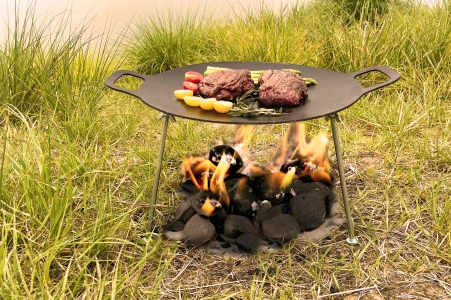
Outdoor Use: While you can use enameled iron on a campfire tripod fire pit, it is generally discouraged. The soot from wood fires is difficult to remove from the enamel, and the uneven heat of a fire is less predictable than a high power gas stove. For outdoor adventures, a raw iron cast iron wok set is a more durable choice.
Common Damage Types & How to Handle Them
Chipping (small missing enamel pieces):
- Cosmetic if small — continue using
- Large chips → exposed iron rusts → clean rust, oil exposed area
- Severe chipping → consider replacement (food safety risk if rust progresses)
Crazing (fine spider-web cracks in enamel):
- Usually cosmetic — from thermal shock or manufacturing stress
- No safety issue unless enamel lifts/flakes
- Prevent future crazing: gradual heating/cooling
Discoloration:
- Rainbow/stains — normal from high heat
- Remove with vinegar + baking soda paste
Rust on exposed iron:
- Clean with vinegar → scrub → oil immediately
- If extensive → pot is nearing end-of-life
Comparison: Enameled vs Raw Cast Iron Dutch Oven Maintenance
Enameled:
- Cleaning: soap & sponge, dishwasher safe
- Maintenance: almost none (no seasoning)
- Damage: permanent (chips/cracks cannot be repaired)
- Lifespan: 10–30 years (depends on care)
Raw cast iron (from chinacastiron.com):
- Cleaning: scrape hot, rinse, dry, oil (1–2 min)
- Maintenance: light seasoning upkeep
- Damage: repairable (re-season, remove rust)
- Lifespan: generations
When to choose enameled:
- Hate seasoning/maintenance
- Cook lots of acidic foods
- Want colorful aesthetics
- Indoor use only
When to choose raw cast iron:
- Want maximum versatility (kitchen + campfire)
- Willing to maintain seasoning
- Prefer lowest lifetime cost
- Value repairability
Conclusion: A Legacy in Glass and Iron
An enameled pot is a high-performance culinary tool that bridges the gap between the ancient strength of iron and the modern cleanliness of glass. By respecting the physics of thermal expansion and utilizing gentle cleaning techniques, your enameled vessel will remain a vibrant, non-stick masterpiece for generations.
Whether you are searing on a high power gas stove or serving a stew at the table, proper maintenance ensures that your investment continues to pay dividends in flavor and beauty.
References and Sources
International Journal of Applied Glass Science (2025): Thermal Expansion Coefficients in Porcelain-Enameled Ferrous Substrates.
Culinary Technology Review: The Impact of Abrasive Cleaning on Glass-Frit Surfaces.
National Association of Cookware Manufacturers: 2026 Safety and Maintenance Standards for Enameled Cast Iron.
Modernist Cuisine: The Physics of Braising in Non-Reactive Vessels.
China Cast Iron Engineering Whitepaper: Optimizing Base Metal Porosity for Superior Enamel Adhesion.