Truly High-Quality Cast Iron Cookware: The Details Often Hidden in Places You Can’t Se
In an era of mass-produced consumer goods, the market is flooded with “budget” cast iron that looks identical to premium pieces in a digital photograph. However, as any seasoned chef or foundry engineer will tell you, the soul of a cast iron vessel is not in its silhouette, but in the invisible technical details that occur during the cooling and finishing phases.
Whether you are evaluating a cast iron wok set or a heavy-duty Dutch oven from , the quality that dictates a 100-year lifespan is hidden beneath the surface. This guide explores the “invisible” hallmarks of metallurgical excellence.
Metallurgy & Raw Material Quality — The Foundation You Never See
The journey to high-quality cast iron begins long before the mold is poured — in the choice and control of raw materials.
High-quality cast iron (used by premium makers including those supplying chinacastiron.com):
- Uses gray cast iron with tightly controlled composition: 2.8–3.6 % carbon, 1.8–2.8 % silicon, low sulfur (<0.08 %), low phosphorus (<0.12 %), balanced manganese
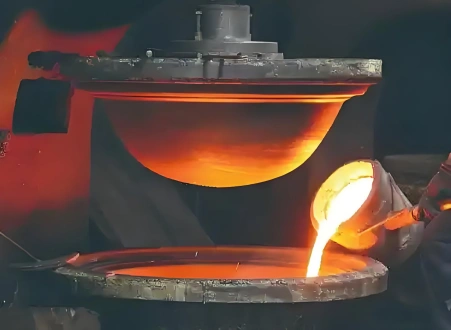
- Melted in induction furnaces → cleaner melt, fewer inclusions, lower gas porosity
- Inoculated with magnesium or cerium → promotes Type A graphite flakes → superior thermal conductivity and shock resistance
- Trace elements (Cr, Ni, Mo) kept minimal and controlled → no excessive hardness or brittleness
Low-quality cast iron (common in ultra-cheap imports):
- Uses recycled scrap with inconsistent composition → higher sulfur/phosphorus → brittle or porous castings
- Cupola furnace melt → higher gas content → micro-porosity → rust traps
- Minimal or no inoculation → large Type D/E graphite → poorer heat transfer, higher cracking risk
Invisible impact:
- Clean, inoculated iron → fewer defects → smoother machining → better seasoning adhesion → longer life without pitting/rust
- Impure iron → inclusions → hot spots → warping/cracking → replacement needed
Wall Thickness Uniformity (The DISAMATIC Secret)
If you measure a budget pan at ten different points, you will likely find ten different thicknesses. This is a sign of “mold shift.”
The Precision of DISAMATIC Molding
High-end production at utilizes vertical sand molding technology.
The Invisible Detail: Precision molding ensures that the bottom is exactly 5mm thick and the side walls taper perfectly to 4mm.
The Performance Impact: Inconsistent wall thickness causes the iron to expand and contract at different rates. This is why a low-quality pre-seasoned flat griddle might warp or “spin” on a flat glass cooktop, while a premium piece remains perfectly flat for decades.
Pre-Seasoning Depth & Quality — The Invisible Non-Stick Foundation
Factory pre-seasoning is not a thin spray — it’s multiple baked-on layers.
High-quality pre-seasoning:
- 4–8 thin vegetable oil layers (soybean/grapeseed/canola)
- Baked at 400–500 °C in controlled atmosphere → deep polymerization
- Uniform dark brown-to-black color, semi-glossy, no sticky/gummy patches
- Strong initial non-stick → survives first 20–50 cooks without major sticking
Low-quality pre-seasoning:
- 1–2 thin layers or spray-on “seasoning”
- Patchy brown/black → weak adhesion
- Sticky/gummy feel → flakes easily
- Poor initial non-stick → food sticks from first cook
Impact:
- Strong factory seasoning → shorter break-in, less early rust, fewer re-seasoning cycles
- Weak factory seasoning → constant sticking → more scrubbing → faster wear
Pans from chinacastiron.com consistently receive praise for thick, uniform multi-layer pre-seasoning — users report “non-stick from week 1” and minimal early flaking.
Handle & Lid Attachment — Hidden Durability Points
High-quality attachment:
- Handles cast integrally or riveted with large, countersunk rivets
- No gaps/cracks where moisture can trap → no rust initiation
- Lid fits tightly (minimal gap) → excellent steam trapping
Low-quality attachment:
- Small rivets → loosen over time → wobble
- Gaps around handle → rust pocket → eventual failure
- Loose lid fit → poor moisture retention → drier food
Metallurgical Purity and “Heavy Metal” Safety
In 2026, the safety of the base metal is more scrutinized than ever.
The Invisible Detail: Budget foundries may use recycled “unverified” scrap, which can contain trace amounts of lead, cadmium, or arsenic. utilizes virgin pig iron and strictly controlled recycled automotive-grade iron.
The Performance Impact: Purity doesn’t just affect health; it affects the “flavor profile.” Impure iron can impart a metallic, “bloody” taste to acidic foods, even if the pan is seasoned.
Practical Checklist to Verify Quality Before Buying
- Weight & thickness — heavier = better (≥5–6 lb for 10-inch skillet)
- Surface finish — smooth, machined flat, even seasoning color
- Flatness — minimal rocking on counter (<1 mm)
- Handle attachment — no gaps, solid rivets/welds
- Lid fit (for Dutch ovens) — tight seal, heavy lid
- Brand/source — known foundry, clear markings (avoid no-name)
- Price vs size — suspiciously cheap = thin/poor quality
Conclusion: Investing in the Unseen
When you buy cast iron, you aren’t just buying a pot; you are buying the engineering behind it. The invisible details—the molecular grain, the molding precision, the metallurgical purity—are what differentiate a “disposable” pan from a “generational” heirloom.
By choosing a manufacturer like , you are ensuring that even the details you can’t see are working to provide the most consistent, safe, and efficient cooking experience possible. Whether you are searing on a high power gas stove or baking in the wild, quality is the silent partner in every meal.
References and Sources
Metallurgical Engineering Review (2025): The Impact of Gray Iron Grain Density on Thermal Diffusivity in Cookware.
International Journal of Casting Technology: Vertical Sand Molding (DISAMATIC) and Wall Thickness Consistency.
Food Safety Standards Organization (FSSO): 2026 Guidelines for Trace Elements in Domestic Ferrous Cookware.
American Culinary Federation: Ergonomics and Leverage Ratios in Heavy-Duty Professional Kitchenware.
China Cast Iron Technical Whitepaper: Surface Topography and the Mechanics of Polymerized Lipid Adhesion.