Is a Rustic (Rusted) BBQ Safe at High Temperatures?
When we talk about a “rustic” or “rusty” BBQ, we are usually referring to one of two things: a specialized weathering steel (Corten) grill designed to look oxidized, or a traditional unit that has developed surface rust due to environmental moisture.
The good news for 2026 grillers is that oxidation (rust) is not inherently toxic. However, using a rusted surface at high temperatures requires a clear distinction between “Aesthetic Patina” and “Structural Decay.” This guide breaks down the safety protocols for cooking with rustic ironware.
The Chemistry of Rust: Is Iron Oxide Harmful?
Rust is simply iron oxide. From a biological standpoint, iron oxide is considered non-toxic in the small quantities that might migrate into food. In fact, it is an FDA-approved food colorant.
High-Heat Stability
At the temperatures produced by a high power gas stove or a charcoal fire ($200^\circ C$ to $400^\circ C$), iron oxide remains chemically stable. It does not release toxic fumes like galvanized steel (zinc) or certain non-stick coatings.
The Flavor Factor: While safe, loose rust can impart a metallic, “bloody” taste to food.
The Solution: For products, any loose, flaking rust should be scrubbed away. The stable, “frozen” rust on the exterior of a campfire tripod fire pit poses no risk to the cooking process inside the vessel.
What “Rusty-Style BBQ” Really Means in High-Heat Contexts
A high-quality rusty-style BBQ is not covered in loose orange rust. It features:
- Stable patina — thin, tightly adherent Fe₂O₃ layer (reddish-brown → dark chocolate/black) that self-limits and protects the underlying steel
- Base materials — corten (weathering steel), thick mild steel with high-temp matte clear coat, or selectively patinated stainless accents
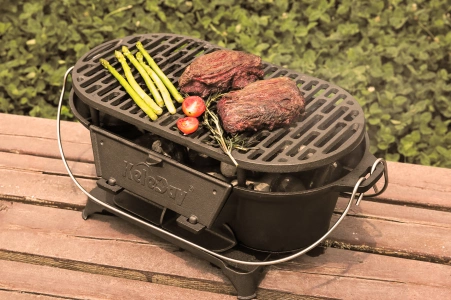
- Cooking surface — almost always cast iron (pre-seasoned grates, reversible grill/griddle plates, flat griddles) because steel grates warp or lose heat quickly at high temperatures
Low-quality “rusty-look” BBQs use:
- Thin mild steel + chemical rust accelerator paint (often fails after 3–12 months)
- No protective clear coat → rust progresses destructively
- Thin chrome-plated or low-grade steel grates → rust-through, warping, poor heat retention
High-temperature zones in grilling:
- Direct coal bed: 600–900 °C
- Grill surface (1–3 inches above coals): 350–550 °C
- Frame/legs (radiant + convective): 200–400 °C
A safe rusty BBQ must withstand these temperatures without patina breakdown, structural weakening, or toxic release.

The Cooking Surface: Managing the Patina
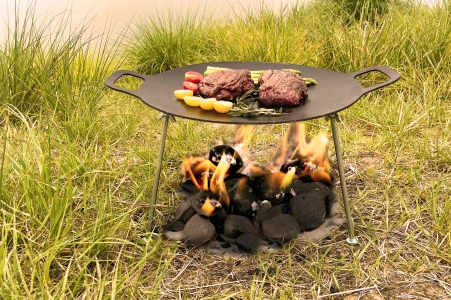
Even if the body of your grill is rustic, your cooking surface—whether it is a pre-seasoned flat griddle or a cast iron wok set—must be maintained differently.
[Image showing a rustic Corten BBQ body with a perfectly seasoned, black cast iron cooking plate]
The “Seasoning” Shield
You should never cook directly on red, flaky rust. Before using a griddle that has developed surface rust:
Scrub: Use a wire brush to remove all loose particles.
Oil: Apply a high-smoke-point oil.
Heat: Use a portable gas burner or the BBQ itself to “bake” the oil into a black, non-stick patina. This transforms the “unsafe” rust into a “safe” culinary surface.
Food Safety & Migration Risk at High Temperatures
Cast iron cooking surface (the part food touches):
- Pre-seasoned with vegetable oil → FDA GRAS (generally recognized as safe)
- No toxic compounds released at <500 °C (normal grilling)
- Trace iron leaching (0.5–3 mg/meal) is beneficial for most people
- No PFAS, no ceramic nanoparticles, no lead/cadmium risk
Rusted frame/legs:
- Stable patina (Fe₂O₃) does not migrate to food (food never touches frame)
- No volatile rust particles at high heat — rust layer is solid, not powder
- Cheap rust-accelerator paints may off-gas VOCs → avoid these models
Real risk only exists in:
- Low-quality painted “rusty” frames → paint burns/degrades → potential fumes
- Cast iron with damaged seasoning → minor iron oxide dust (still not toxic)
Conclusion: Food-contact safety is excellent when the cooking surface is pre-seasoned cast iron (as used in quality rusty-style BBQs and all models from chinacastiron.com). Frame patina poses no food-safety risk.
Temperature and Structural Integrity
High temperatures can cause “Rust Jacking”—a process where heat forces moisture trapped in rust layers to expand, potentially cracking the metal.
Uniform Heating: Ensure your high power gas stove or coal bed is distributed evenly. Localized “hot spots” on a heavily rusted frame can cause warping.
The Support System: If you are hanging a heavy pot from a Dutch oven cooking tripod, inspect the “rustic” chain. Surface rust on a chain is fine, but if the links have thinned significantly, the heat will weaken the metal further, risking a dangerous drop.
Maintenance for Humid and Rainy Environments
In 2026, we emphasize “Active Oxidation Management.” A rustic BBQ from is designed to live outdoors, but it still requires care:
Post-Cook Oil Wipe: While the grill is still warm, wipe the exterior with a cloth lightly dampened with oil. This keeps the “rust” color beautiful but prevents it from becoming “flaky” and invasive.
Ash Removal: Wet ash is highly alkaline and will eat through a rustic campfire tripod fire pit much faster than rain alone. Always clear the ash after the fire is extinguished.
Conclusion: Aesthetic without Compromise
A rustic BBQ is perfectly safe at high temperatures, provided it is a high-quality casting from a reputable source like . The iron oxide patina is a natural, stable shield that thrives in the heat.
By maintaining a clean, seasoned cooking surface—such as a pre-seasoned flat griddle—and ensuring the structural frame is thick and robust, you can enjoy the timeless, earthy beauty of a rustic grill without any health or safety risks.
References and Sources
Corten BBQ Grill Safety Tips (2026): Weathering Steel Standards for Outdoor Culinary Equipment.
Journal of Food Science: Iron Migration from Oxidized Ferrous Surfaces during High-Temperature Searing.
National Association of Corrosion Engineers (NACE): Thermal Stability of Protective Patinas in Low-Alloy Steels.
FDA Food Code Section 4-101.12: Metallic Coating and Cast Iron Safety in Food Service.
China Cast Iron Metallurgy Lab: Tensile Strength of Weathered Gray Iron under Continuous Heat Cycles.