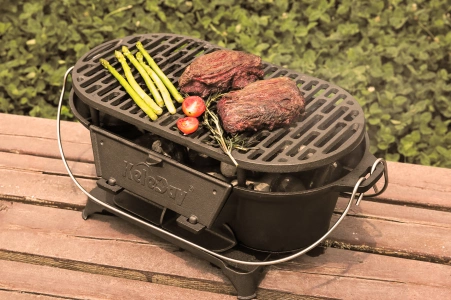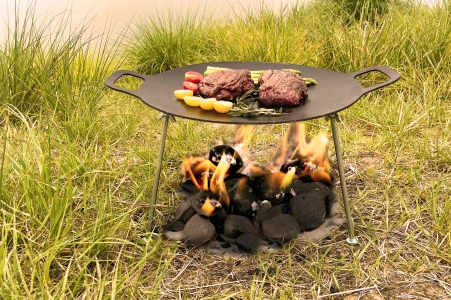
Dutch Oven vs Regular Cast Iron Pot: What’s the Real Difference?
In the modern kitchen, the term “cast iron” often acts as a broad umbrella. However, for those seeking precision in heat management, the distinction between a Dutch oven and a standard cast iron skillet (or pot) is critical. Whether you are sourcing a cast iron wok set or a pre-seasoned flat griddle from China Cast Iron, understanding the geometry and thermal dynamics of these tools will redefine your culinary results.
This guide breaks down the metallurgical similarities and the structural differences that make each tool unique.
Basic Design Differences: Lid, Shape, and Purpose
Regular Cast Iron Pot / Pan
- Shape: Open-top, shallow to medium depth (skillet 1–3 inches deep, casserole 3–5 inches)
- Lid: Usually none, or optional loose-fitting lid (not sealed)
- Handles: One long handle + helper handle (or two side handles)
- Purpose: Quick searing, frying, sautéing, shallow braising, stovetop-to-oven transition
- Examples: Lodge 10–12 inch skillets, griddles, shallow casseroles
Dutch Oven
- Shape: Deep pot (usually 4–8 qt capacity, 4–6 inches deep), wide base, high sides
- Lid: Very heavy, tight-fitting, often with raised rim (for holding coals in campfire use)
- Handles: Two loop handles on sides (for lifting with gloves or over fire)
- Purpose: Braising, stewing, baking, roasting, one-pot meals, oven-like cooking over coals
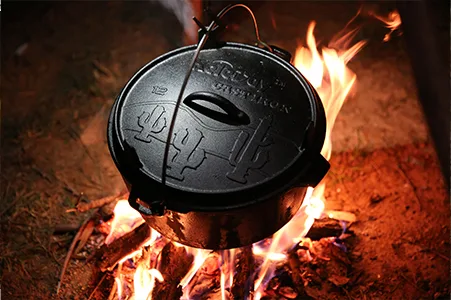
- Camp models: Legs on bottom + flanged lid (allows coals on top for baking)
Key visual difference: A regular cast iron pot/pan is flat and open → designed for direct stovetop contact. A Dutch oven is deep and enclosed → designed for trapping steam and creating oven-like conditions.
Practical impact: Regular pans excel at quick, high-heat tasks (searing steak, frying eggs). Dutch ovens excel at slow, moist cooking (braises, bread, roasts).

Thermal Dynamics: Radiant vs. Conductive Heat
How the heat moves determines what the pot can do.
Conductive Mastery (Standard Skillet)
Standard cast iron excels at conductive heat—transferring energy directly from the iron to the food. When placed on a portable gas burner, it creates the intense, localized heat required for a crusty sear.
Radiant Mastery (Dutch Oven)
Because a Dutch oven is usually placed inside an oven or hung from a Dutch oven cooking tripod, it utilizes radiant heat. The thick walls absorb energy and “glow” with infrared heat, cooking the center of a sourdough loaf or a beef chuck roast evenly from every angle.
Outdoor Versatility: Survival vs. Convenience
In 2026, the “Off-Grid” kitchen has become a testing ground for these materials.
The Dutch Oven: When paired with a campfire tripod fire pit, the Dutch oven becomes a mobile oven. You can place hot coals on its flat lid to bake bread in the wilderness—a feat impossible with a standard skillet.
The Standard Skillet: Better suited for quick meals on a high power gas stove. It is the tool of choice for the “fry-up” but lacks the thermal protection needed for long-duration forest stews.
For wholesale distributors focusing on folding BBQ grill wholesale, the standard skillet is often an “add-on,” while the Dutch oven is the “primary vessel” for serious outdoor enthusiasts sourcing from China Cast Iron.
Seasoning & Maintenance Differences
Raw cast iron pan
- Seasoning on cooking surface only (bottom & sides)
- Lid usually not seasoned (or lightly)
- Maintenance: oil cooking surface after use
- Rust risk: higher on unseasoned lid/underside
Dutch oven
- Seasoning on interior + lid underside (full cooking surface)
- Heavy lid helps seasoning stay in place (steam/oil trapped)
- Maintenance: oil entire interior & lid underside
- Rust risk: lower overall (enclosed design traps moisture less)
Beginner advantage: Dutch ovens season faster due to moisture retention → stronger, more durable layer over time.
Pre-seasoned models from chinacastiron.com arrive with thick, multi-layer seasoning on both pot and lid — easier initial maintenance.
Sourcing the Right Tool: A 2026 Checklist
| Feature | Best For Dutch Oven | Best For Standard Skillet |
| Baking Bread | Yes (Steam Trapping) | No (Poor Volume) |
| Searing Steaks | Possible, but awkward | Excellent (Easy Access) |
| Deep Frying | Superior (Safe Depth) | Dangerous (Splatter Risk) |
| Campfire Use | Excellent with a tripod | Best on a grate |
When sourcing from China Cast Iron, ensure you select the weight class that matches your cooking style. A Dutch oven should be heavy enough to maintain a seal, while a skillet should be balanced for one-handed maneuverability.
Conclusion: Two Sides of the Same Coin
The difference between a Dutch oven and a standard cast iron pot is the difference between braising and searing. One is a slow-motion transformation of texture, while the other is a high-speed celebration of fire.
By integrating both into your kitchen—perhaps starting with a versatile pre-seasoned flat griddle and moving to a heavy Dutch oven from China Cast Iron—you gain complete control over the physics of fire. Whether you are at home on a high power gas stove or in the wild with a Dutch oven cooking tripod, having the right iron for the task is the hallmark of a master cook.
References and Sources
Metallurgical Engineering Review (2025): Comparative Thermal Mass Analysis of Deep-Vessel vs. Shallow-Vessel Castings.
Journal of Culinary Physics: The Role of Lid Weight in Moisture Retention and Pressure Simulation.
Modernist Cuisine: Radiant Heat Transfer in Heavy-Duty Ferrous Cookware (2026).
International Standards Organization (ISO): ISO 9001:2026 Standards for High-Density Food-Grade Ironware.
China Cast Iron Design Lab: Optimizing Self-Basting Spacing for Enameled and Raw Iron Lids. https://chinacastiron.com/