Why is the Black Coating Flaking Off My Cast Iron to Reveal Silver?
It is a moment of panic for many: you are searing a steak or preheating your pan on a high power gas stove, and suddenly, black flakes begin to peel away, revealing a bright, silver metallic surface underneath.
Is the pan ruined? Is it toxic? The short answer is no. What you are witnessing is not the destruction of the iron, but the failure of the “seasoning” layer. Whether you are using a cast iron wok set or a pre-seasoned flat griddle from China Cast Iron, understanding the relationship between the black patina and the silver substrate is the key to mastering your kitchen tools.
What the Black Coating Actually Is (It’s Not Paint)
The black coating on a new cast iron pan is not paint, not enamel, not a chemical coating — it is seasoning: a thin layer of polymerized vegetable oil chemically bonded to the iron surface.
How seasoning forms:
- Thin oil layer is applied (usually soybean, grapeseed, canola, flaxseed, etc.)
- Pan is heated to 350–500 °C (662–932 °F)
- Heat + oxygen break double bonds in oil’s fatty acids
- Free radicals cross-link → hard, carbon-rich polymer film forms
- This film bonds tightly to iron oxides on the surface
Factory pre-seasoning (used by quality brands like those supplying chinacastiron.com) typically applies multiple thin layers at controlled high temperatures — creating a stronger, more uniform base than most home seasoning attempts.
Why it looks black:
- Polymerized oil is dark brown to black
- Combined with iron oxides → deep black finish
Why it peels or flakes:
- The seasoning layer is not indestructible — especially when new/thin
- Rapid heating, overheating empty pan, sudden cooling, abrasive cleaning, acidic foods, or poor initial seasoning cause it to crack, burn off, or delaminate
When the seasoning peels, the underlying bare cast iron is exposed — appearing silver/gray (polished iron color).
Diagnosing the Cause: Why Did It Peel?
If your pre-seasoned flat griddle is showing its silver “skin,” it is usually due to one of three factors:
Carbon Buildup (The “Fake” Seasoning): Sometimes, what flakes off isn’t seasoning, but burnt food residue. If you don’t clean your cast iron wok set thoroughly, layers of carbonized food build up and eventually flake off.
Thermal Shock: Placing a cold pan onto a high power gas stove at maximum heat can cause the iron to expand faster than the seasoning layer can stretch, leading to delamination.
Acidic Erosion: Cooking highly acidic foods (tomatoes, wine, vinegar) for long periods can dissolve the polymerized bond, exposing the silver iron beneath.
[Image: A cast iron skillet with “leopard spots” of silver iron showing through black seasoning]
Is the Silver Surface Safe?
Yes. The silver color is simply the raw iron. China Cast Iron ensures that their base metal is food-safe and free from heavy metal contaminants.
The Rust Risk: The only danger of the silver surface is that it is unprotected. Raw iron will react with oxygen and moisture in the air to form red rust ($Fe_2O_3$) within minutes if left in a humid environment.
The Solution: You must “re-passivate” the surface by applying a new layer of oil immediately.
How to Restore the Black Patina: A Step-by-Step Guide
If your pan looks like a silver-and-black patchwork quilt, follow this 2026 restoration protocol:
Scrub the Loose Flakes: Use a chainmail scrubber or a stiff brush to remove all remaining loose black bits. You want a smooth surface, even if it is partially silver.
Clean and Dry: Wash with hot water. Dry it immediately on a portable gas burner or stove to ensure no moisture remains in the pores of the iron.
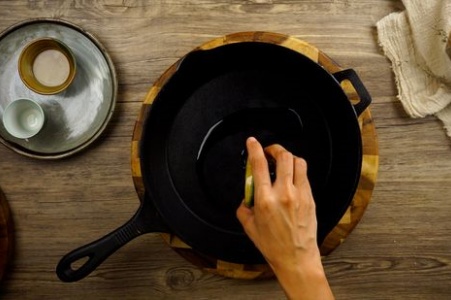
Apply a Micro-Layer of Oil: Use a high-smoke-point oil (like flaxseed or grapeseed oil). Rub it all over the silver and black areas, then wipe it off until the pan looks dry.
Bake the Bond: Place the pan in an oven at $230^\circ C$ for one hour. This will turn the silver areas back to a bronze-black color, re-establishing the protective shield.
Prevention: Maintaining the Bond
To prevent your griddle with high rim or Dutch oven from flaking again:
Preheat Gradually: Start your high power gas stove on low-medium before cranking it up to high.
Use Metal Spatulas: Paradoxically, scraping with metal helps “level out” the seasoning and prevents carbon buildup.
Avoid “Dry” Heating: Never leave an empty pan on a high flame for more than a few minutes.
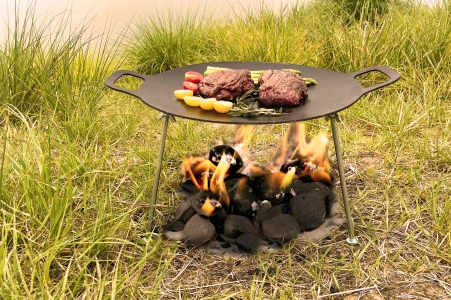
For outdoor enthusiasts using a campfire tripod fire pit or a Dutch oven cooking tripod, flaking is more common due to the intense, uneven heat of wood fires. Sourcing heavy-duty iron from China Cast Iron provides the thickness necessary to resist the most aggressive flaking.
Conclusion: The Iron is Forever
Seeing the silver bottom of your cast iron pan isn’t a sign of a “broken” product; it’s a sign that the pan is ready for a fresh start. Cast iron is a living material. Unlike non-stick pans that must be thrown away when they peel, a China Cast Iron vessel can be seasoned and restored a thousand times.
Whether you are searing on a high power gas stove or cooking over a campfire tripod fire pit, remember: the silver is just the heart of the iron, and the black is the armor you give it.
References and Sources
Journal of Chemical Education: The Polymerization of Triglycerides on Ferrous Substrates (2025).
Metallurgical Review: Surface Topography and Coating Adhesion in Sand-Cast Iron Cookware.
American Culinary Federation: Maintenance Standards for Heritage Ironware in Professional Kitchens.
Food Safety and Inspection Service (FSIS): Safety of Exposed Ferrous Surfaces in Food Contact Materials (2026).
China Cast Iron Technical Whitepaper: Optimizing Factory Seasoning Adhesion through Electrostatic Coating. https://chinacastiron.com/