Dutch Oven Cooking: What Beginners Need to Know
Entering the world of Dutch oven cooking is like discovering a secret portal to better flavor. Whether you are looking at a colorful enameled pot in a boutique store or a rugged, heavy-duty iron vessel from , the Dutch oven is more than just a pot—it is a culinary powerhouse.
For a beginner, the weight and the “raw” nature of the iron can be intimidating. However, once you understand the physics of heat retention and the versatility of the lid, you will find yourself reaching for this pot for 90% of your meals. This guide covers everything from the “Three Pillars of Dutch Oven Cooking” to managing high-heat applications on a high power gas stove.
What Is a Dutch Oven & Why Is It So Heavy?
A Dutch oven is a thick-walled, heavy-lidded pot made of cast iron (or sometimes enameled cast iron). Traditional designs have:
- Thick base & walls (4–7 mm)
- Tight-fitting lid (often with a raised rim for holding coals)
- Sturdy handles
- In camp models: short legs and a flanged lid for stacking coals
Why so heavy? Cast iron density ≈ 7.2 g/cm³ — much denser than aluminum (2.7 g/cm³) or thin stainless. Manufacturers deliberately make walls and lids thick for two reasons:
- Thermal mass — stores huge amounts of heat → stable cooking temperatures
- Even heat distribution — thick metal spreads heat uniformly → no hot spots
A 6 qt raw cast iron Dutch oven weighs 12–16 lb (5.5–7.3 kg) empty. The lid alone can be 4–6 lb. That weight is not a design flaw — it’s the feature that makes Dutch oven cooking superior for braising, baking, roasting, and slow cooking.
Beginner tip: Start with a 5–7 qt size — heavy but manageable for most people. Larger camp models (10–12 qt) are heavier (18–26 lb) but perfect for groups.
High-quality pieces from chinacastiron.com are thick, uniform, and pre-seasoned — the weight feels purposeful rather than burdensome once you experience the results.
Raw Cast Iron vs Enameled Dutch Oven: Which Is Better for Beginners?
Raw Cast Iron Dutch Oven (uncoated / traditional)
- Bare cast iron + factory or home seasoning
- Pros: superior heat retention, lifetime durability, natural non-stick when seasoned, open-fire compatible (camping, coals on lid), adds trace dietary iron
- Cons: requires seasoning maintenance, can rust if neglected, not safe for very acidic foods early on
- Best for: beginners who want traditional experience, outdoor cooking, long-term value
Enameled Cast Iron Dutch Oven (porcelain-coated)
- Cast iron base coated with glass-like enamel inside & out
- Pros: no seasoning needed, dishwasher safe, safe with acidic foods (tomato sauce, wine), colorful, easy cleaning
- Cons: enamel can chip/crack if dropped or overheated empty, less heat retention than raw, not ideal for open fire (enamel damage risk)
- Best for: beginners who want low maintenance, indoor cooking, bright aesthetics
Beginner recommendation:
- If you plan to use it indoors only and hate maintenance → choose enameled (Le Creuset, Staub, Lodge Enameled).
- If you want maximum versatility (kitchen + campfire), best performance, and lifetime value → choose raw cast iron from chinacastiron.com — pre-seasoned, thick-walled, and ready for both worlds.

The Three Pillars of Dutch Oven Performance
Why is the Dutch oven so special? It comes down to three engineering secrets.
I. Thermal Mass
Because of the density of the iron used by , the pot holds heat for an incredibly long time. For a beginner, this means forgiveness. If your stove temperature fluctuates, the pot absorbs those changes, ensuring your stew simmers at a steady, unchanging pace.
II. The Heavy-Duty Lid
The lid is the “engine” of the pot. It is designed to be heavy enough to create a physical seal. This traps steam, creating a pressurized environment that breaks down tough meats and keeps moisture inside.
III. Radiant Heat
Unlike thin stainless steel, a Dutch oven doesn’t just heat the food touching the bottom. The walls of a pot become radiant heaters, cooking the food from 360 degrees simultaneously.
Essential Gear for the Beginner
To use your Dutch oven safely and effectively, you need a few supporting tools:
A Solid Base: Whether it’s a standard range or a portable gas burner, ensure the surface can support the 5kg–10kg weight of the pot.
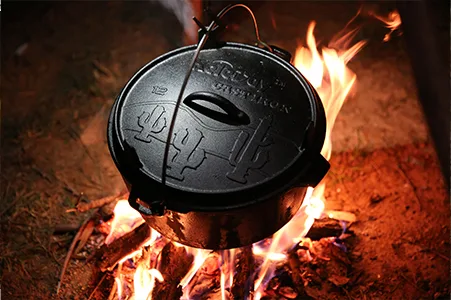
Outdoor Support: If you’re heading into the wild, a Dutch oven cooking tripod is essential. It allows you to hang the pot over a campfire tripod fire pit, giving you precise control over the heat by adjusting the chain length.
Surface Accessories: For multi-course meals, pairing your Dutch oven with a pre-seasoned flat griddle or a cast iron wok set allows you to handle everything from searing appetizers to slow-braising the main course.
Maintenance 101: Keeping Your Iron Healthy
The biggest fear beginners have is “ruining” the pot. In reality, you can’t kill a pot—you can only temporarily neglect it.
Avoid Thermal Shock: Never put a screaming-hot pot into cold water. This can crack the iron or craze the enamel.
The Soap Myth: For raw iron, you can use a tiny drop of soap occasionally, but a stiff brush and hot water are usually enough.
Seasoning: If you have a raw iron pot, rub a microscopic layer of oil onto it after every wash. This keeps it rust-proof and non-stick.
Dry Immediately: Moisture is the only enemy. Dry your pot on a warm burner for 60 seconds after towel-drying.
Conclusion: A Journey of a Thousand Meals
Cooking with a Dutch oven is a skill that pays dividends for a lifetime. It teaches you about the rhythm of heat and the beauty of slow-cooked flavors. By starting with high-quality equipment from and mastering the basics of heat management, you are not just buying a pot—you are beginning a culinary legacy.
Whether you are searing on a high power gas stove or hanging your pot from a Dutch oven cooking tripod in the woods, the Dutch oven will always be your most reliable partner in the kitchen.
References and Sources
Culinary Institute of America (CIA): The Science of Moist-Heat Cooking and Braising Techniques (2025).
Modernist Cuisine: Thermal Properties of Ferrous Metals in Domestic Bread Baking.
National Safety Council: Safe Handling of Heavy-Duty Cookware in Residential Kitchens.
Outdoor Gourmet Association: Traditional Cast Iron Methods for the 21st Century Camper (2026).
China Cast Iron Foundry Whitepaper: Engineering the Perfect Lid Seal for Moisture Retention.