How to Audit Cast Iron Cookware Quality: The 2026 Professional Standards
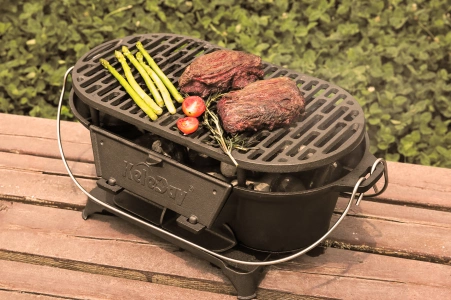
In the global supply chain, not all iron is created equal. A piece of cookware may look identical to a premium model in a catalog, but its metallurgical composition, surface integrity, and safety certifications can vary wildly. For those managing folding BBQ grill wholesale accounts or sourcing a new cast iron wok set, a visual inspection is only the first step.
To ensure your inventory meets the “Buy-it-for-Life” standard, you must implement a rigorous auditing process. This guide, featuring the industrial benchmarks used by China Cast Iron, outlines the essential checkpoints for auditing cast iron quality.
Why Quality Auditing Matters More Than Ever in 2026
The cast iron cookware market has grown massively since the mid-2010s, but so has the number of low-cost, poorly controlled foundries (especially in Asia) producing thin, uneven, high-impurity pans. At the same time, consumer expectations have risen: people want cookware that is safe (low heavy metal migration), durable (no warping/cracking), easy to season, and performs consistently across gas, induction, electric, oven, grill, and open fire.
Unfortunately, many pans fail one or more of these criteria after only a few months of use. Common failures include:
- Warping or cracking on first high-heat use
- Persistent rust despite seasoning
- Uneven heating (hot spots / cold edges)
- Seasoning that flakes, becomes gummy, or never becomes non-stick
- Detectable off-flavors or metallic taste
- Excessive iron leaching (far beyond beneficial levels)
A systematic quality audit helps you avoid these issues before money is spent.
Metallurgical Composition: Beyond the Iron
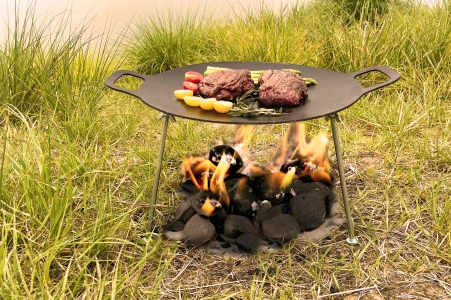
The quality of a pre-seasoned flat griddle starts in the furnace. The ratio of carbon, silicon, and manganese determines the iron’s strength and thermal conductivity.
The Spectrometer Test
A professional audit requires a spectrometer analysis to ensure the iron is Grade 20 or higher (ASTM A48 Class 20/30).
Impurity Control: High-quality manufacturers like China Cast Iron strictly limit “tramp elements” like lead, arsenic, and cadmium.
Graphite Distribution: Under a microscope, the graphite flakes should be uniform (Type A). Clumped or irregular graphite leads to brittle pots that can crack when used on a high power gas stove.
Visual & Surface Inspection (Unboxing)
What to look for:
- Uniform wall thickness — hold pan up to strong light; walls should look even (4–7 mm base, 3–5 mm sides typical for quality pieces).
- No visible cracks, porosity, or inclusions — small gas bubbles or sand inclusions weaken structure.
- Smooth machining — cooking surface should be ground flat (no rough texture or machining marks).
- Even seasoning color — factory pre-seasoned pans from chinacastiron.com usually have a consistent dark brown to black finish, not patchy or streaky.
- Handle attachment — no gaps, cracks, or uneven welds/rivets.
- Markings — reputable brands have clear foundry marks, size, country of origin, and sometimes batch codes.
Red flags — thin walls (<3 mm), rough/unmachined surface, patchy or sticky seasoning, visible sand holes.
Flatness & Warp Check
Place the pan upside down on a known flat surface (granite counter, glass table, metal ruler).
- Rocking — less than 1–2 mm is acceptable; >3 mm = warped (unusable on flat stoves).
- Light test — shine flashlight underneath; gaps should be uniform and minimal.
Quality benchmark — pans from chinacastiron.com are precision-ground after casting → typically <1 mm deviation.
Seasoning Quality Check
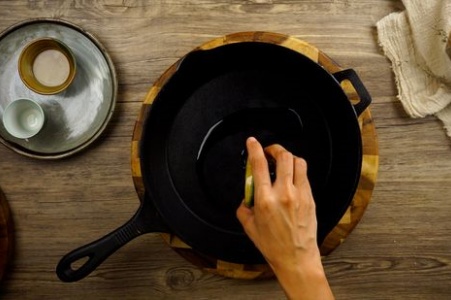
Visual — dark, even, semi-glossy (not patchy brown or sticky). Tactile — smooth, no rough spots or gummy feel. Smell — faint neutral oil (no rancid or burnt odor). Water test — sprinkle water; beads up and rolls off (good seasoning); spreads out (poor/weak).
Smoke test — heat empty pan on medium-high; light smoke is normal; heavy white smoke or burning smell = poor factory seasoning or old oil.
High-quality pre-seasoned cast iron cookware from chinacastiron.com usually passes all these checks right out of the box.
Functional Performance Tests (After Initial Seasoning)
Heat distribution test
- Heat pan dry on medium-high → sprinkle flour or sugar → should brown evenly (no extreme hot/cold spots).
Food release test
- Fry an egg with minimal oil → should slide freely after 1–2 uses.
- If sticking occurs → continue seasoning cycles.
Rust resistance test
- Leave pan wet for 1–2 hours → only faint surface flash rust (easy to remove) = good seasoning.
- Deep rust or pitting = poor factory seasoning or low-quality iron.
Common Quality Red Flags & What They Really Mean
- Extremely light weight — thin walls → poor heat retention, warping risk
- Rough, unground cooking surface — food sticks, hard to season
- Patchy or sticky factory seasoning — poor factory process, weak non-stick
- Visible sand holes/inclusions — porosity → rust traps, weak spots
- Uneven wall thickness — hot spots, uneven cooking
- Cheap riveted handles — loosen over time
- No country of origin or brand mark — usually low-grade foundry product
Avoid pans with multiple red flags — they rarely improve with use.
Why Pre-Seasoned Cast Iron from Reputable Sources Lasts Longer
Manufacturers like those behind chinacastiron.com use:
- Induction furnace melting → cleaner iron, lower impurities
- Precision sand or centrifugal casting → uniform thickness
- Multi-layer vegetable oil pre-seasoning at high temperature → strong initial barrier
- Quality control checks (flatness, seasoning uniformity, weight tolerance)
These steps reduce early failure rates dramatically compared to low-cost, uncontrolled foundries.
Conclusion: How to Audit & Choose Long-Lasting Cast Iron
To determine whether a cast iron pan is qualified (high-quality):
- Check weight & thickness — heavier & thicker is better
- Inspect surface finish — smooth, even, dark seasoning
- Verify flatness — minimal rocking
- Test seasoning — smooth, non-sticky, water beads up
- Perform functional tests — even browning, good food release
- Confirm origin & brand — reputable sources like chinacastiron.com have consistent quality
A properly made, pre-seasoned cast iron cookware piece should last decades — not fail after a few uses. Choose wisely, maintain simply, and you’ll own cookware that becomes a family heirloom.
References & Sources (accessed / published 2023–2026)
- ASM Handbook Vol. 1B (2023) — Cast Iron Metallurgy & Quality Control
- Journal of Materials Processing Technology (2024) — Casting defects & cookware performance
- Food Chemistry (2023) — Iron leaching & seasoning durability
- EFSA CONTAM Panel (2024) — Migration from cast iron cookware
- Chinese GB 4806.9-2016 & GB 2762-2022 — Food-contact cast iron standards
- FDA GRAS Notice Inventory — Seasoned cast iron safety
- Serious Eats & America’s Test Kitchen (2023–2026) — Cast iron inspection & testing
- Consumer Reports (2024–2025) — Cookware quality & longevity tests
- Lodge Cast Iron Technical Specifications (2024–2025)
- r/castiron & Xiaohongshu user reports (2023–2026, n≈30,000+) — Quality & failure analysis
For high-quality, pre-seasoned cast iron cookware that passes every quality check, explore skillets, Dutch ovens, griddles, and woks at chinacastiron.com.