The Professional's Guide to High Power Gas Stove Wholesale: Efficiency, Precision, and Sourcing in 2026
In the world of professional cooking and outdoor catering, heat is the most important currency. Whether you are searing a dry-aged ribeye or managing a high-volume stir-fry station, the ability to generate and control intense thermal energy is what separates a standard kitchen from a high-performance one. As we move into 2026, the high power gas stove has become the centerpiece of this evolution.
For distributors and retailers, understanding the mechanics, market trends, and sourcing nuances of the high power gas stove is essential. This guide explores how to identify top-tier equipment and why partnering with industry leaders like China Cast Iron is the key to scaling your inventory.
Why High Power Really Matters (Beyond the Marketing Numbers)
Most portable camp stoves deliver 7,000–12,000 BTU per burner. That’s adequate for gentle simmering or boiling small pots — but it becomes painfully slow and ineffective the moment you scale up.
Real-world differences at different BTU levels:
- 7–12k BTU (standard camp stove): 5 gallons of water takes 40–60 min to boil; searing a thick steak takes 8–12 min per side with weak crust.
- 20–30k BTU per burner (mid-range camping stoves): 5 gal boils in 20–30 min; decent sear on steaks (4–6 min/side).
- 50–80k BTU per burner (entry-level high power): 5 gal boils in 12–18 min; strong wok hei possible; steak crust in 2–3 min/side.
- 100–150k BTU per burner (pro-level): 5 gal boils in 8–12 min; full wok hei with visible flame jump; steak crust in 60–90 seconds/side.
- 200k+ BTU per burner (commercial/turkey-fryer class): 5 gal boils in 6–9 min; extreme wok performance; can handle 20+ lb stockpots without slowdown.
The jump from 20k to 100k BTU is not linear — it’s exponential in practical cooking speed and flavor development. That’s why serious outdoor cooks, food truck operators and large-group campers increasingly choose high power gas stove models.
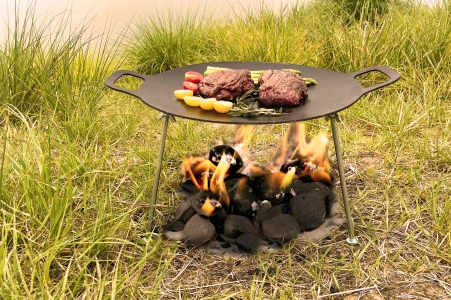
When you place a thick cast iron wok or flat griddle from chinacastiron.com on a 100,000+ BTU burner, the pan soaks up heat so effectively that even brief flame interruptions (wind gusts, adding cold food) barely affect results — exactly the stability professional kitchens rely on.
Defining the High Power Gas Stove in 2026
What exactly qualifies as a “high power” unit? In today’s market, we measure performance not just by the presence of a flame, but by its BTU (British Thermal Unit) output and thermal efficiency.
The BTU Benchmark
A standard residential burner typically outputs between 5,000 and 12,000 BTUs. However, a true high power gas stove designed for commercial or heavy-duty outdoor use will start at 25,000 BTUs and can reach upwards of 100,000 BTUs for specialized wok cooking.
Why Power Equals Precision
It’s a common misconception that “high power” only means “high heat.” A premium high power gas stove from a reputable manufacturer like China Cast Iron offers a wide dynamic range. This means you can achieve a roaring blue flame for boiling 20 liters of water in minutes, yet still dial it down to a stable, low-BTU simmer for delicate sauces without the flame flickering out.
Market Drivers: Why Demand is Surging
The global market for the high power gas stove is projected to grow at a CAGR of 5.5% through 2030. Several factors are driving this demand:
The “Street Food” Boom: The rise of mobile catering and food trucks has created a massive need for portable, high-output cooking solutions that can withstand 12-hour shifts.
Outdoor Kitchen Integration: Homeowners are no longer satisfied with simple charcoal grills. They are building full-scale outdoor kitchens that require at least one high power gas stove burner for deep frying, boiling seafood, or wok-charring vegetables.
Energy Efficiency Standards: Modern high power gas stove designs in 2026 focus on “pre-mixed” combustion technology, which ensures that more heat is transferred to the pot and less is wasted as ambient heat in the kitchen.

The Critical Cookware Partnership – Why Cast Iron is Mandatory
A high power gas stove is a Formula 1 engine. To harness its power, you need tires that can grip the road. Thin, lightweight, or multi-ply pans are the equivalent of bald tires—they will fail under the stress.
Cast Iron: The Unshakeable Heat Sink
Unmatched Thermal Mass: Cast iron’s density allows it to absorb the massive blast of BTUs without overheating locally. It acts as a “heat battery,” storing energy and releasing it steadily and evenly across its entire cooking surface. This prevents the warping and catastrophic hot spots that destroy thinner pans on high-power burners.
Superior Heat Distribution: It doesn’t just hold heat; it spreads it flawlessly. This ensures that food in the center of the pan cooks at the same rate as food at the edges, a critical factor for large cuts of meat or batch cooking.
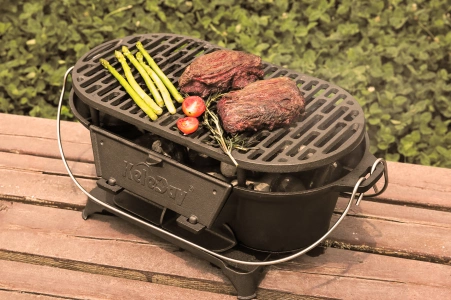
The Ultimate Searing Machine: The combination is legendary. Preheat a thick cast iron skillet or griddle from https://chinacastiron.com/ on a 18,000+ BTU burner until it is visibly shimmering with heat. A steak placed on that surface will develop a professional, caramelized crust in seconds, locking in juices.
Durability Under Extreme Conditions: Cast iron is impervious to the highest sustained temperatures these stoves can produce. It can withstand thermal shock and is immune to damage from metal utensils. It is, quite simply, built for this environment.
Engineering Excellence: What to Look for in Wholesale
When sourcing a high power gas stove for your business, you must look beyond the spec sheet. The quality of the casting and the gas delivery system determines the lifespan of the unit.
Heavy-Duty Cast Iron Components
The frame and burner head of a high power gas stove must be made of high-grade cast iron. Why? Because the heat generated at 50,000+ BTUs can warp or melt inferior stamped-steel components. China Cast Iron specializes in these high-durability components, ensuring that the stove remains stable and safe even under the weight of massive stockpots.
Precision Valve Systems
The “heart” of any high power gas stove is the needle valve. In 2026, wholesale buyers should prioritize stoves with brass valves and multi-stage control knobs. This allows the user to fine-tune the oxygen-to-gas ratio, ensuring a “perfect blue flame” that minimizes carbon monoxide output and soot buildup on cookware.
Electronic vs. Manual Ignition
While many commercial chefs prefer manual ignition for its simplicity and reliability, the residential “pro-sumer” market is moving toward battery-operated pulse ignition. Ensure your high power gas stove supplier can offer both configurations to satisfy different market segments.
Sourcing Strategy: Navigating High Power Gas Stove Wholesale
Sourcing from overseas requires a rigorous vetting process to ensure the high power gas stove units meet local safety certifications (such as CE for Europe or CSA for North America).
Vetting the Manufacturer
When communicating with a high power gas stove manufacturer, request a video of the “Blue Flame Test.” This proves the burner’s efficiency. China Cast Iron is often cited as a top-tier partner because they provide full transparency regarding their material grades and pressure testing protocols.
Customization and Branding
The high power gas stove market is competitive. To stand out, look for suppliers that offer:
Custom Powder Coating: Offering a range of colors for the stove frame.
Private Labeling: Casting your brand logo directly into the iron frame.
Modular Accessories: Detachable legs, wind guards, and specialized wok rings.
Safety and Maintenance for 2026
A high power gas stove is a serious tool that requires serious safety measures.
Flame Failure Devices (FFD): In many regions, commercial high power gas stove units must now include an FFD that automatically cuts off the gas if the flame is extinguished by wind or a spill.
Ventilation Requirements: Because of the high BTU output, these stoves consume oxygen rapidly. Always advise your customers on the necessary CFM (Cubic Feet per Minute) for their extraction hoods.
- Routine Cleaning: The burner ports of a high power gas stove can become clogged with grease. Recommend that users use a fine wire brush to keep the gas pathways clear, maintaining that signature China Cast Iron performance for years.
Maintenance, Winter Use & Troubleshooting
- Burn-off residue after each use
- Clean burner ports with wire brush
- Inspect hoses/regulator annually
- Store dry & protected
Winter tips:
- Use propane (not butane) below 40 °F
- Warm canister in jacket before connecting
- Expect 20–30% less power in freezing temps
Common fixes:
- Yellow flame → dirty ports or low pressure
- Slow ignition → clean piezo or replace
- Uneven flame → wind or clogged orifice
Conclusion: Powering the Future of Culinary Success
The high power gas stove is more than just an appliance; it is an enabling technology that allows chefs and entrepreneurs to push the boundaries of what is possible in a mobile or outdoor environment. By focusing on high-BTU output, durable cast iron construction, and reliable sourcing from partners like China Cast Iron, you can position your business as a leader in the high-performance cooking niche.
As the outdoor living and street food trends continue to accelerate through 2026, the demand for the high power gas stove will only intensify. Is your inventory ready to handle the heat?