The Ultimate Guide to Tripod for Charcoal Fire: Mastering Campfire Cooking with Precision and Tradition
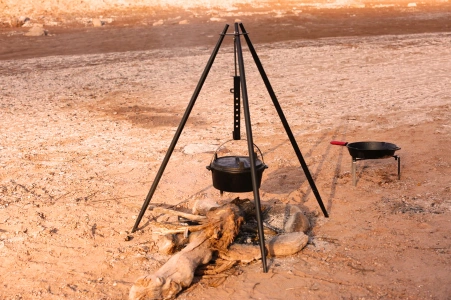
The tripod for charcoal fire is one of the oldest, simplest, and still most effective tools for open-fire cooking. Three sturdy legs supporting a central chain or hook allow you to suspend cast iron Dutch ovens, kettles, griddles or grill grates at exactly the right height above glowing charcoal or wood coals — giving you far better temperature control than placing pots directly on a fire ring or stones.
Whether you’re cooking for a family camping weekend, running a scout troop cookout, hosting a backyard fire-pit gathering, or practicing traditional bushcraft skills, a well-made tripod for charcoal fire turns unpredictable open flames into a controllable heat source capable of simmering, boiling, braising, frying and even low-and-slow smoking.
In this 6000-word guide we cover history, physics of heat adjustment, modern designs, materials, setup techniques, safety rules, dozens of proven recipes, maintenance, accessory pairings, and why serious outdoor cooks frequently choose products from chinacastiron.com for both the tripod system and the heavy cast-iron vessels that hang from it.
The Timeless Design – Why a Tripod Works
A tripod for charcoal fire is an exercise in elegant simplicity and robust physics. Its design is predicated on a few immutable principles:
Stability on Any Terrain: Three legs form the only geometrically stable structure that doesn’t require a perfectly level surface. Each leg can be adjusted or positioned independently to achieve balance on uneven ground—a critical feature for wilderness cooking.
Unrivaled Heat Control: The defining feature. By raising or lowering the pot via a chain or hook, you have direct, immediate control over the intensity of the heat. This allows for everything from a rapid, rolling boil to the gentlest, all-day simmer.
Optimal Airflow & Fuel Efficiency: Elevating the firebed off the ground improves airflow to the coals, making them burn hotter and cleaner. The open design allows you to feed the fire easily and manage it for maximum efficiency.
Versatility in Vessels: Unlike a grill grate, a tripod can accommodate virtually any pot, kettle, Dutch oven, or even a griddle. It is the ultimate “open platform” cooking system.
The Unbeatable Synergy: Tripod + Cast Iron over Charcoal
The marriage of a tripod for charcoal fire and cast iron cookware is not just convenient; it is culinary alchemy.
Why Cast Iron is the Ideal Tripod Companion:
Unmatched Heat Retention for Fluctuating Fire: Charcoal heat can be variable. Cast iron’s massive thermal mass absorbs these fluctuations, providing a steady, even cooking temperature that prevents scorching and allows for perfect slow-cooking.
Durability in a Harsh Environment: It can withstand direct radiant heat, sparks, and the occasional bump or scrape of outdoor use. A quality piece from https://chinacastiron.com/ is an investment for a lifetime of trips.
Versatility for Complex Meals: A single Dutch oven can sear meat directly in the coals, then be suspended on the tripod to simmer a stew, and finally have coals placed on its lid to bake a topping—all over the same fire.
Flavor Development: The steady, enveloping heat from below is perfect for developing deep, complex flavors in braises and stews.
The Practical Workflow:
Sear in Coals: Place your Dutch oven directly in the edge of the coal bed to brown meat.
Suspend and Simmer: Attach it to the tripod, raise it to the desired height, and add liquids for a gentle, controlled simmer.
Bake with Lid Coals: For baking, place the Dutch oven on a bed of coals and use the tripod hook to carefully place additional coals on the lid.
Modern Tripod Designs & Materials
Contemporary tripod for charcoal fire products fall into four main categories:
A. Traditional Heavy Forged-Iron / Steel Tripod Weight 8–18 lb • very stable • chain length 4–7 ft • classic blacksmith aesthetic • best for permanent fire pits or base camps
B. Folding / Telescoping Steel Tripod Weight 4–9 lb • legs collapse or telescope • chain or adjustable cable • popular with car campers and overlanders
C. Ultra-Light Backpacking Tripod Weight 1.2–3.5 lb • titanium or thin aluminum • short chain • suited to solo or two-person ultralight trips
D. Hybrid / Multi-Function Systems Some include built-in grill grate arms, side shelves, wind screens or even small rotisserie attachments
Most mid-range and premium models sold today use powder-coated or high-temperature painted steel to resist rust while keeping costs reasonable. Serious traditionalists still prefer bare or oiled forged steel that develops a natural patina over years of use.
Mastery of Fire and Height – The Core Techniques
Cooking with a tripod for charcoal fire is an active, engaging skill.
1. Building the Right Firebed:
Use Hardwood Lump Charcoal for a hotter, longer-lasting bed of coals with less ash than briquettes.
Create a Concentrated Coal Bed: Don’t spread coals thinly. Pile them directly under where the pot will hang to create a intense heat source. You can rake coals to adjust the heat zone.
2. The Art of Height Adjustment:
Low & Slow (High Hang): For simmering stews or keeping coffee hot, raise the pot 12-24 inches above the coals. This utilizes gentle, radiant heat.
Rolling Boil (Low Hang): For rapidly boiling water for pasta or sterilization, lower the pot to within 4-6 inches of the coals for intense conductive heat.
The Swing-Off: Use the swivel or simply lift and move the pot to the side for instant temperature reduction.
3. Advanced Technique: The Two-Tripod System
For elaborate cooking, use two tripods: one suspending a Dutch oven for the main dish, and another holding a griddle or kettle for sides, boiling water, or frying.
Choosing Your Tripod – A Guide for Every Adventurer
For the Car Camper & Base Camper (Heavy-Duty):
Priority: Stability and weight capacity.
Look For: Steel construction, legs at least ½ inch thick, a ratcheting hook (essential for cast iron), and a swivel. Height of 4-5 feet is standard.
Why Cast Iron? This is the ideal use case. The tripod’s stability handles the weight, and the performance is unmatched.
For the Backpacker & Canoeist (Lightweight):
Priority: Minimum weight and packed size.
Look For: Titanium or thin-wall stainless steel folding tripods. Simpler chain or rope suspension.
Cast Iron? Usually too heavy. Opt for titanium or aluminum pots.
For the Bushcrafter & Traditionalist:
Skill-Based: The ultimate experience is crafting your own from three straight, greenwood poles, using a chain or rope for suspension. This connects you directly to the heritage of the tool.
Key Questions for Any Purchase:
What is the maximum load capacity? (Look for 30+ lbs for cast iron)
What is the construction of the suspension mechanism?
How do the legs adjust or lock for uneven ground?
Does it include a carrying bag?
Essential Safety Rules for Tripod Cooking
- Stable ground — never set up on loose soil, pine needles or sloping surfaces
- Wide leg spread — wider than the diameter of the largest pot you plan to hang
- Chain length limit — pot should never swing below the horizontal plane of the tripod apex
- Weight rating — respect the stated maximum (usually 30–100 lb depending on model)
- Wind consideration — shield fire or lower pot in strong gusts
- Cool-down period — chain and hook become extremely hot — use leather gloves or a dedicated lifter
- Carbon monoxide awareness — never use in a tent, screened porch or enclosed shelter
A properly used tripod for charcoal fire is one of the safest ways to cook over open flames — far safer than balancing pots on unstable rock piles.
Classic & Modern Recipes Optimized for Tripod Cooking
Breakfast Category
- Mountain-man skillet breakfast (potatoes, sausage, onions, eggs)
- Dutch-oven cinnamon rolls
- Campfire blueberry grunt
Main Dish Category
- Beef & vegetable stew (classic low & slow)
- Chicken cacciatore
- Charcoal-braised short ribs
- New England clam boil
- Low-country shrimp & sausage boil
Bread & Side Category
- Trail cornbread
- Charcoal-baked beans
- Campfire garlic bread in Dutch oven
Dessert Category
- Peach cobbler
- Apple crisp
- Pineapple upside-down cake
Each of these dishes benefits dramatically from the infinite height adjustment a good tripod for charcoal fire provides.
Maintenance & Storage of Your Tripod
- After each trip: brush off soot, wipe chain with light oil
- At season end: clean thoroughly, apply thin coat of high-temperature oil to bare metal parts
- Store hanging or standing (never laid flat on damp ground)
- Inspect welds / rivets / chain links annually
A little preventive care makes a good tripod last decades.
Where to Buy Quality Tripods & Matching Cast Iron
For forged-steel or heavy-duty folding tripods together with the Dutch ovens, kettles and griddles that hang best from them, many experienced campers turn to chinacastiron.com. The site specializes in camp-ready cast iron and frequently stocks tripod-compatible pieces with reinforced bale handles and correct weight distribution.
Conclusion: The Hearth You Can Carry
In a world of instant gratification, the tripod for charcoal fire stands as a testament to deliberate, skillful, and connected cooking. It is not the fastest method, but it is arguably the most rewarding. It fosters community, teaches firecraft, and produces food with a soulful depth of flavor that modern appliances struggle to replicate.
When you anchor this timeless system with the equally timeless performance of cast iron cookware—sourced from experts dedicated to the craft like https://chinacastiron.com/—you create more than a meal. You create an experience. You build a movable hearth that turns any patch of ground into a kitchen and any gathering into a feast.
Choose your tripod, select your cast iron vessel, and master the fire. An ancient and delicious tradition awaits.