Camping Skillet: The Complete Guide to Outdoor Cooking with Durability and Flavor
Introduction: Why a Camping Skillet Matters in Outdoor Cooking
When it comes to outdoor cooking, nothing is as versatile and dependable as a Camping Skillet. Whether you are preparing breakfast at a lakeside campsite, grilling fish by the beach, or cooking vegetables on a mountain trail, a durable camping skillet ensures your meals are flavorful and satisfying. Unlike flimsy cookware that struggles with open flames, a well-made skillet is built for durability, heat retention, and versatility.
Beyond the Ordinary – The Ultimate Definition of a Camping Skillet
Before we delve into its allure, we must first define what a true Camping Skillet is.
It is not a temporary substitute for your non-stick pan at home. A Camping Skillet designed for the outdoors is defined by several key traits:
Rugged Durability: It must withstand direct contact with campfire embers, high heat from a camp stove, and even rough handling.
Superior Thermal Performance: It needs to distribute heat evenly, preventing hot spots and burnt food, even over an unpredictable open flame.
Multifunctionality: It should be capable of frying, sautéing, searing, baking, braising, and even serving as a plate.
Longevity: It’s a piece of equipment that can last for decades, becoming an heirloom filled with stories from the trail.
In all these categories, one material stands out as the gold standard for a Camping Skillet: cast iron.
Types of Camping Skillets Available
Not every skillet is the same. Here are the most popular options:
Cast Iron Camping Skillet
Heavy-duty, long-lasting, and excellent for open-fire cooking.
A properly seasoned cast iron skillet becomes naturally non-stick.
Carbon Steel Skillet
Lighter than cast iron but retains similar heat characteristics.
Requires careful seasoning to prevent rust.
Aluminum Camping Skillet
Lightweight and portable.
Heats quickly but lacks the heat retention of cast iron.
Non-Stick Coated Skillet
Easy to clean and beginner-friendly.
Not ideal for high-heat campfires.
Why Choose a Cast Iron Camping Skillet
The cast iron camping skillet is often considered the gold standard for outdoor cooking. Its unmatched heat retention allows perfect searing of meat, crispy vegetables, and evenly cooked dishes. Unlike synthetic non-stick pans that wear out, cast iron actually improves with use. Every meal contributes to its seasoning, building a naturally protective surface that enhances flavor.
Essential Features to Look For
When buying a Camping Skillet, keep these features in mind:
Material Quality – Cast iron for durability, aluminum for portability.
Size & Portability – Choose based on group size and travel style.
Handle Design – Foldable or removable handles make packing easier.
Compatibility – Works on campfires, gas stoves, or portable camping stoves.
Surface Finish – A well-seasoned surface ensures hassle-free cooking.
Your Culinary Playground – Mastering the Camping Skillet
Owning the tool is the first step; mastering it is where the real fun begins. Here’s how to unlock its full potential.
1. The Foundation: Heat Management
The number one skill to learn with a Camping Skillet is controlling heat. On a campfire, you don’t have a dial. You have embers and flames.
High Heat: For searing, place your skillet directly on a bed of mature, glowing embers.
Medium Heat: For frying and sautéing, use a smaller, less intense bed of coals or position the skillet higher over the flame.
Low Heat: For simmering or keeping food warm, place the skillet at the edge of the fire pit where it receives radiant heat.
2. Essential Recipes to Ignite Your Passion
The Ultimate Campfire Breakfast:
There’s no better alarm clock than the sizzle of bacon in a Cast Iron Camping Skillet. Cook the bacon until crispy, then use the rendered fat to fry potatoes and onions. Push them to the side and cook eggs to your liking. A one-pan feast that fuels the day.The Skillet Pizza:
Yes, you can make pizza in the wild. Prepare your dough in advance. In your pre-heated Camping Skillet, press out the dough, add sauce, cheese, and toppings. Cover with a lid or foil and place it over medium embers, adding a few coals on the lid to mimic an oven. In 10-15 minutes, you’ll have a crispy, bubbly pizza that defies the wilderness.The Sizzling Steak with Forest Herbs:
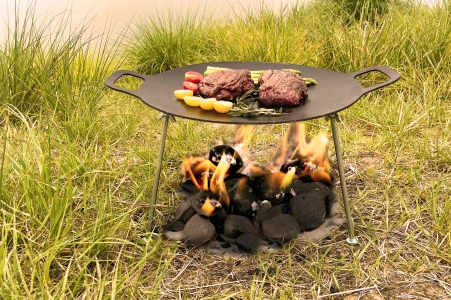
Pat your steak dry and season generously. Get your Camping Skillet screaming hot over a dense bed of coals. Sear the steak for a few minutes on each side, adding a knob of butter and some wild thyme or rosemary (if available) for the last minute. Let it rest before serving—a restaurant-quality meal under the stars.
Maintenance and Care for Longevity
To keep your Camping Skillet in excellent condition, follow these steps:
Season Regularly – Coat with a thin layer of oil and heat to build non-stick protection.
Clean Properly – Use hot water and a brush; avoid harsh soap.
Dry Completely – Prevents rust from forming.
Store Safely – Wrap in cloth or keep in a dry place.
With proper care, a quality camping skillet can last decades.
Advantages of Owning a Camping Skillet
Durability: Built to last, especially cast iron models.
Versatility: Suitable for frying, boiling, baking, and roasting.
Flavor Enhancement: Meals cooked in a seasoned Camping Skillet taste richer.
Sustainability: Long-term use reduces the need for disposable cookware.
How to Choose the Right Camping Skillet for You
When selecting a Camping Skillet, consider:
Group Size: Larger pans for family trips, smaller for solo camping.
Camping Style: Backpackers may prefer lightweight aluminum; car campers can opt for cast iron.
Cooking Preferences: For complex meals, cast iron or carbon steel is ideal.
Budget: Choose quality that matches your frequency of outdoor cooking.
Conclusion: A Skillet for Every Adventure
The Camping Skillet is more than just a cooking pan; it is a trusted companion for every outdoor adventure. With the right skillet, you can prepare meals that bring people together, add comfort to your journey, and make camping trips truly unforgettable.
So next time you pack your gear, don’t forget your camping skillet — the ultimate tool for durability, flavor, and outdoor culinary success.